How to use this information: Temperature is only a starting point is most useful when it is read with location, update time and the surrounding forecast rather than treated as an isolated number. For everyday planning, compare the current value with the next few hours. When safety is involved, confirm conditions with the responsible meteorological or public-safety authority.
What not to assume: A consumer forecast simplifies a changing atmosphere. Weather and outdoor exercise: planning with heat, rain and wind should support a decision, not create false precision about an exact street, exact minute or guaranteed outcome.
Temperature is only a starting point
Exercise generates body heat, so the same air temperature can feel very different while running than while standing still. Sun, humidity and wind also change the environment.
Read temperature together with feels-like conditions and the expected duration of your activity.
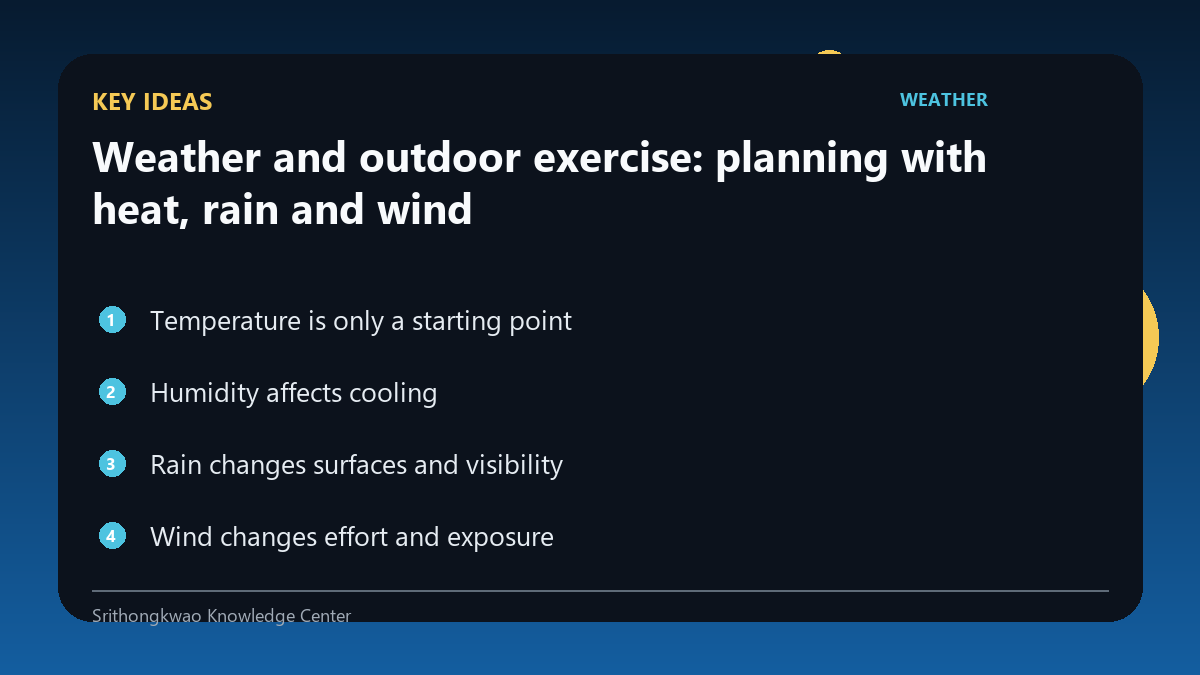
Humidity affects cooling
High moisture can reduce evaporative cooling in warm weather. This can make exertion feel more difficult even when the temperature is familiar.
When heat is significant, use official heat-health advice and reduce reliance on a single app metric.
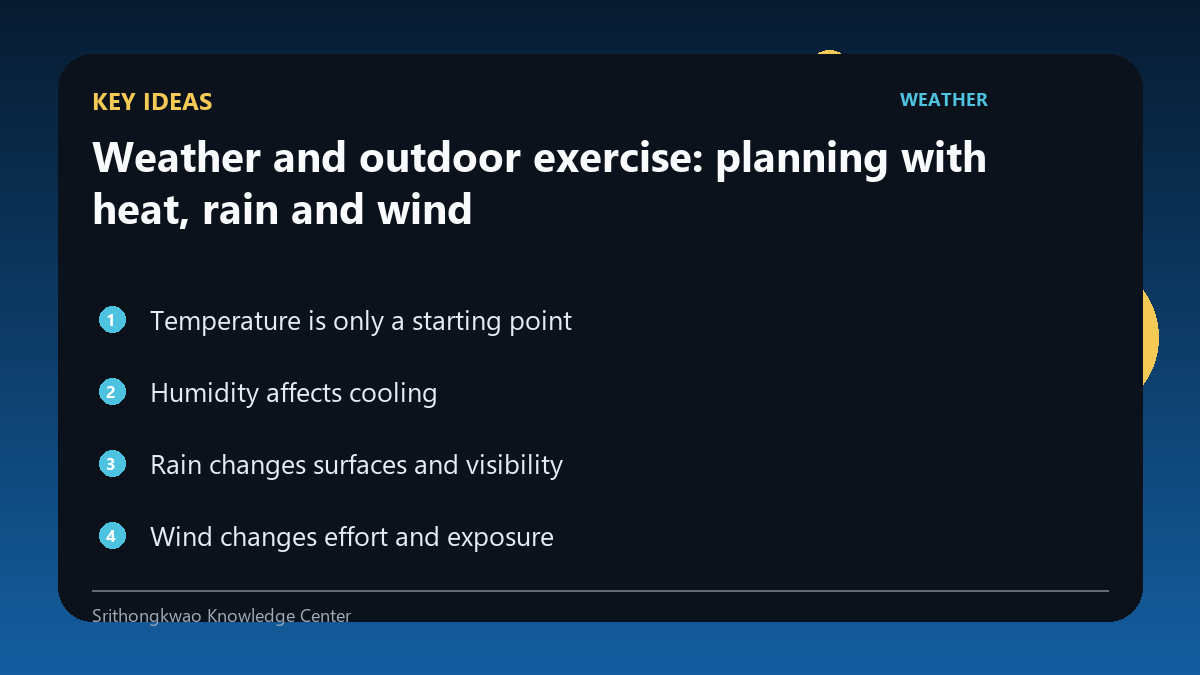
Rain changes surfaces and visibility
Wet roads, trails and painted surfaces can become slippery, while heavy rain can reduce visibility for runners, cyclists and drivers sharing the route.
Consider route surface and traffic exposure, not just whether you personally mind getting wet.
Wind changes effort and exposure
Headwinds increase effort for cycling and running, while strong gusts can affect balance or create debris hazards.
Check both sustained wind and gusts, especially on open routes.
Thunderstorms require a different decision
Lightning risk is not an ordinary discomfort factor. Outdoor exercise should not continue simply because rain is still light.
Follow official lightning and storm safety guidance and choose appropriate shelter.
Common mistakes to avoid
- Using temperature alone.
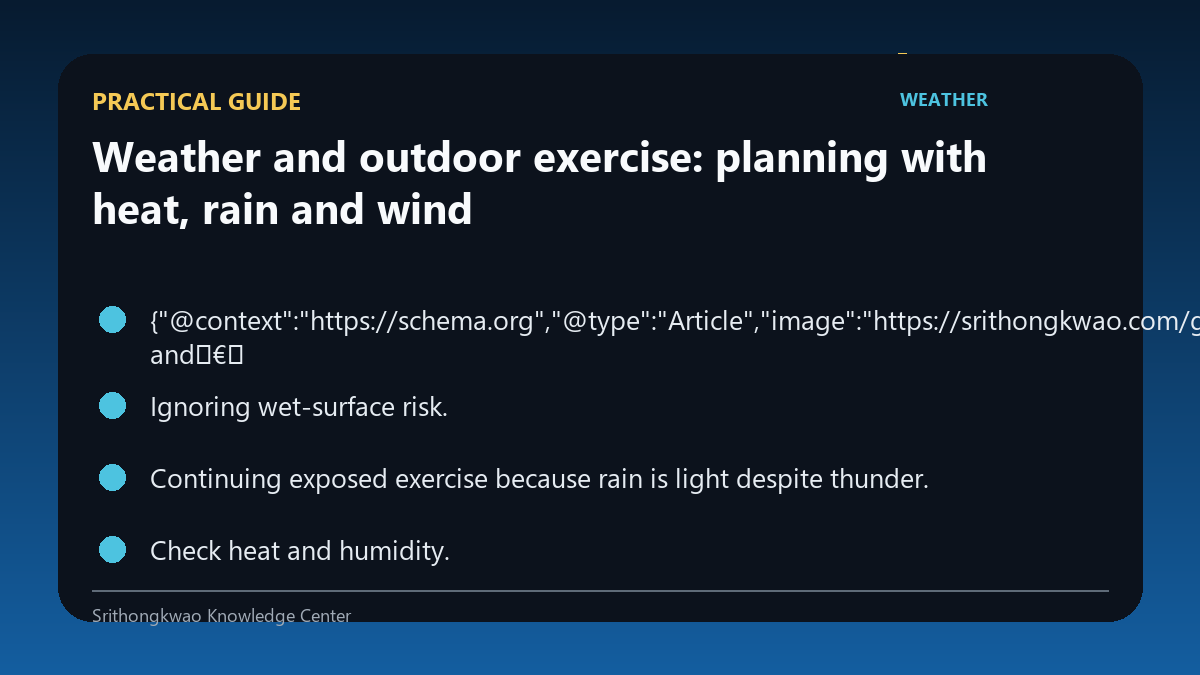
- Ignoring wet-surface risk.
- Continuing exposed exercise because rain is light despite thunder.
Practical checklist
- Check heat and humidity.
- Review rain timing.
- Check wind and gusts.
- Choose a safer route or time.
- Follow official storm guidance.
Frequently asked questions
Is feels-like useful for exercise?
It provides environmental context, but it is not a personalized exercise-safety assessment.
Does light rain mean lightning is safe?
No. Lightning risk is not determined by rain intensity.
Why can wind matter more for cycling?
Speed, balance and exposure make cyclists more sensitive to headwinds, crosswinds and gusts.