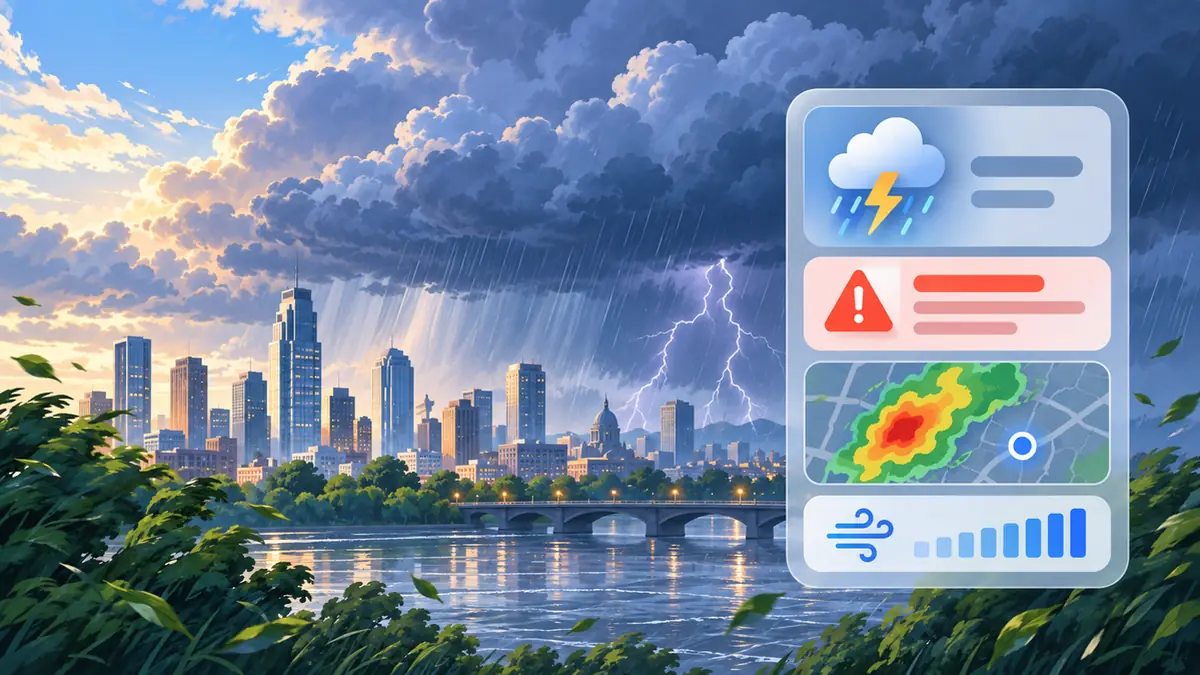
How to use this information: A thunderstorm icon is a summary is most useful when it is read with location, update time and the surrounding forecast rather than treated as an isolated number. For everyday planning, compare the current value with the next few hours. When safety is involved, confirm conditions with the responsible meteorological or public-safety authority.
What not to assume: A consumer forecast simplifies a changing atmosphere. Thunderstorm forecasts: reading risk without false precision should support a decision, not create false precision about an exact street, exact minute or guaranteed outcome.
A thunderstorm icon is a summary
An icon or label indicates that thunderstorm conditions are expected or possible in the forecast period. It does not describe the exact path, first lightning strike or strength of every storm cell.
Use the label as a reason to inspect timing, rain, wind and official warning information.
Lightning can occur beyond heavy rain
A storm can produce dangerous lightning even where rainfall is light or has not yet reached you. Looking only at rain intensity can therefore underestimate storm risk.
If you hear thunder or official guidance indicates lightning risk, follow appropriate shelter advice rather than waiting for heavy rain.
Storm timing can shift
Thunderstorm development depends on atmospheric processes that can change the timing and location of individual cells. Hourly forecasts are useful but should not be treated as exact appointment times.
Refresh frequently when an outdoor plan depends on storm timing and use official radar or warnings when available.
Wind and visibility can deteriorate quickly
Thunderstorms can bring gusty winds, intense rain and sharply reduced visibility over a short period. Those hazards may matter even if the storm does not last long.
Drivers, outdoor events and exposed activities should have a plan for rapid changes rather than relying only on the pre-event forecast.
Warnings take priority
Official weather agencies issue warnings using observations, radar, models and local hazard criteria. Those products are designed for public safety.
When a warning applies to your area, follow the official instruction even if the consumer app still shows a less urgent summary.
Common mistakes to avoid
- Waiting for heavy rain before taking lightning seriously.
- Treating the hourly storm icon as an exact start time.
- Ignoring official warnings because an app screen looks calm.
Practical checklist
- Check official alerts.
- Refresh the forecast.
- Watch direct sky conditions.
- Have an indoor shelter plan.
- Avoid exposed activity during lightning risk.
Frequently asked questions
Can lightning happen before rain?
Yes. Lightning danger is not limited to the heaviest rain area.
Why does storm timing change between updates?
Individual storm development and movement can be difficult to predict precisely.
Which source should I trust during a warning?
Follow the responsible official meteorological and emergency authorities for your location.