How to use this information: Lightning is not the same as rain is most useful when it is read with location, update time and the surrounding forecast rather than treated as an isolated number. For everyday planning, compare the current value with the next few hours. When safety is involved, confirm conditions with the responsible meteorological or public-safety authority.
What not to assume: A consumer forecast simplifies a changing atmosphere. Lightning awareness: when a storm forecast becomes a safety issue should support a decision, not create false precision about an exact street, exact minute or guaranteed outcome.
Lightning is not the same as rain
Electrical activity can extend beyond the part of a storm producing the strongest rain.
Do not wait for a downpour before taking thunder or lightning risk seriously.
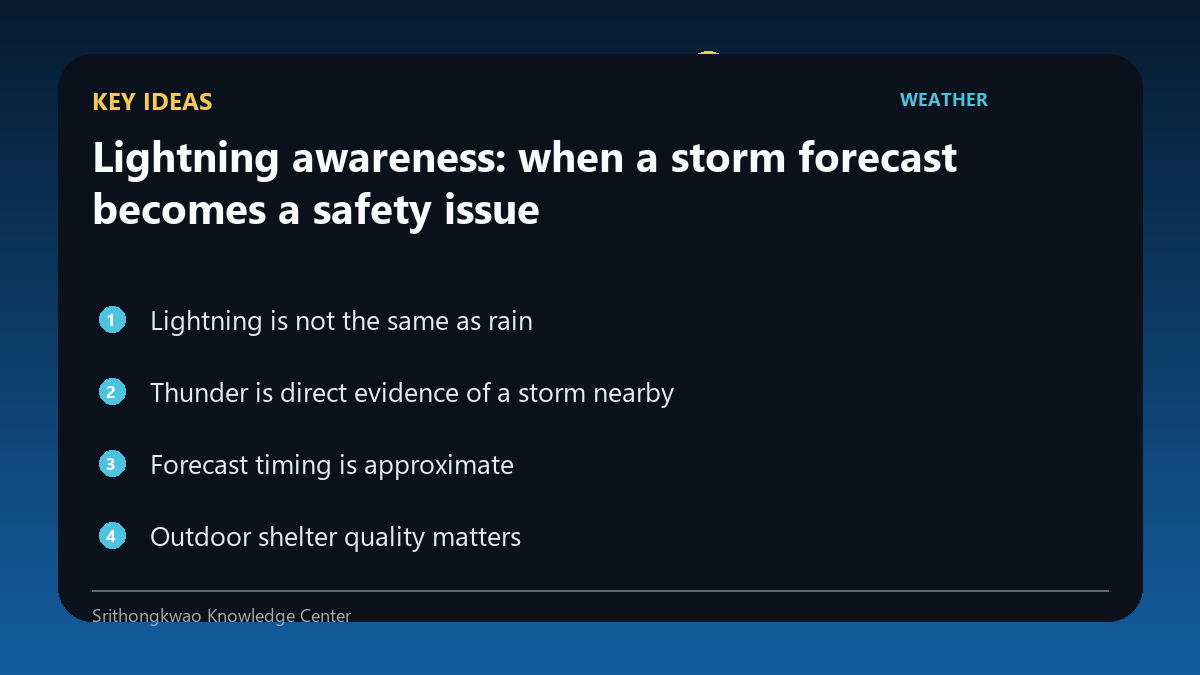
Thunder is direct evidence of a storm nearby
If you can hear thunder, a storm is close enough to deserve attention under standard lightning-safety guidance.
Move according to official shelter recommendations rather than checking whether the app probability is high enough.
Forecast timing is approximate
Storm development and movement can shift from one update to the next.
Use forecast timing for planning but use direct observation and official alerts for immediate action.
Outdoor shelter quality matters
Trees, open structures and vehicles do not all provide the same protection. The correct action depends on recognized safety guidance.
Plan the shelter location before an outdoor event begins.
Wait for official guidance before resuming
The absence of heavy rain does not prove the lightning hazard has ended.
Use the responsible authority's return-to-activity guidance rather than restarting solely because the app icon changed.
Common mistakes to avoid
- Waiting for rain before sheltering.
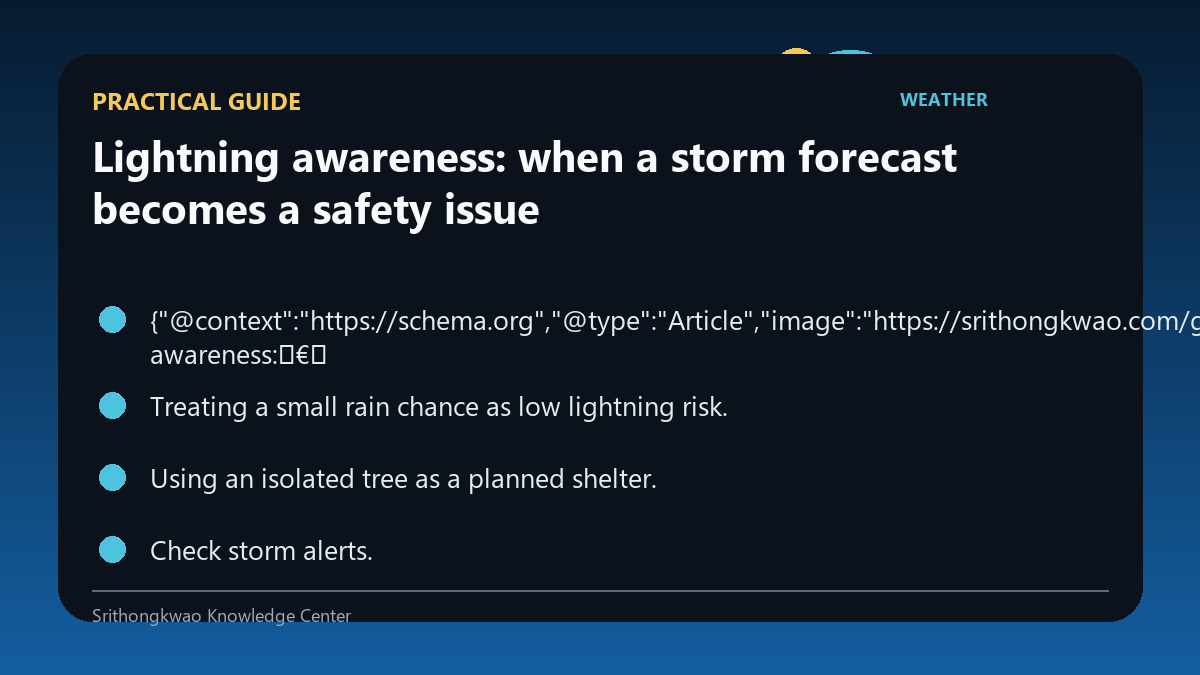
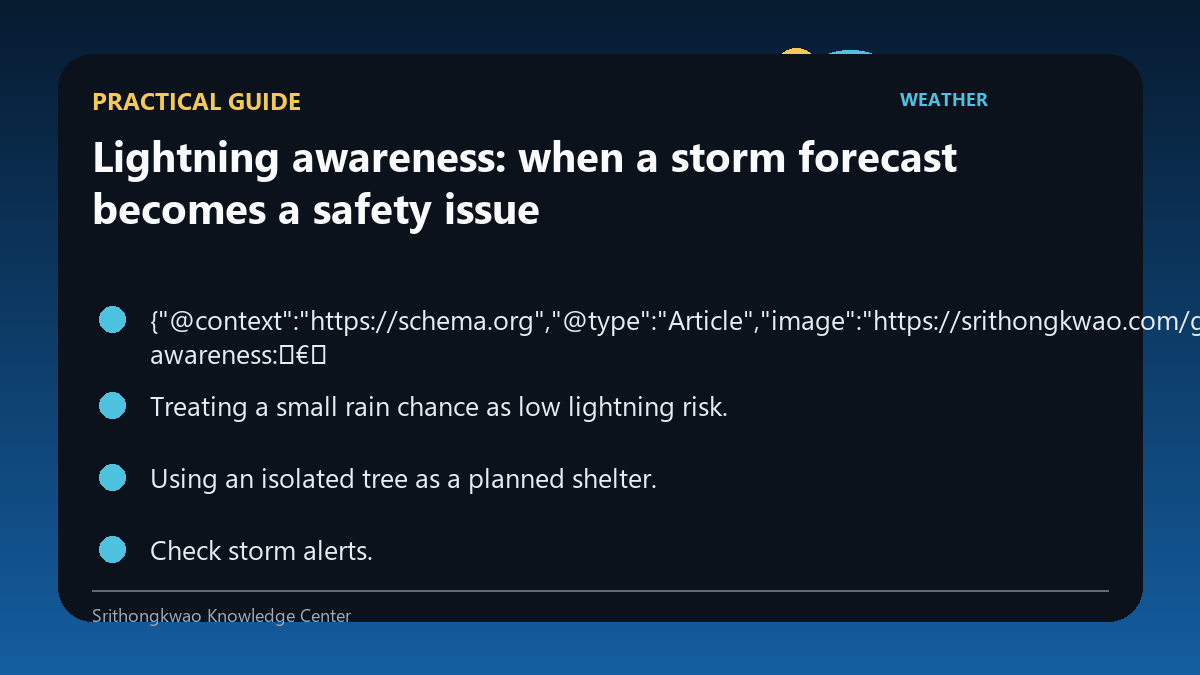
- Treating a small rain chance as low lightning risk.
- Using an isolated tree as a planned shelter.
Practical checklist
- Check storm alerts.
- Know a suitable shelter.
- Act when thunder is present.
- Do not rely on rain intensity.
- Follow return-to-activity guidance.
Frequently asked questions
Can lightning occur without heavy rain at my location?
Yes. Electrical activity can extend beyond the heaviest precipitation.
Why can storm timing shift?
Individual storm cells can develop and move differently as new atmospheric information emerges.
When can I resume outdoor activity?
Follow recognized official lightning-safety guidance for your location and activity.