How to use this information: Intensity can matter more than the daily total is most useful when it is read with location, update time and the surrounding forecast rather than treated as an isolated number. For everyday planning, compare the current value with the next few hours. When safety is involved, confirm conditions with the responsible meteorological or public-safety authority.
What not to assume: A consumer forecast simplifies a changing atmosphere. Heavy rain: what weather information can and cannot tell you should support a decision, not create false precision about an exact street, exact minute or guaranteed outcome.
Intensity can matter more than the daily total
A large amount spread across many hours may have different impacts from a shorter burst of intense rain.
Use hourly rainfall and storm information where available rather than relying only on the daily accumulation.
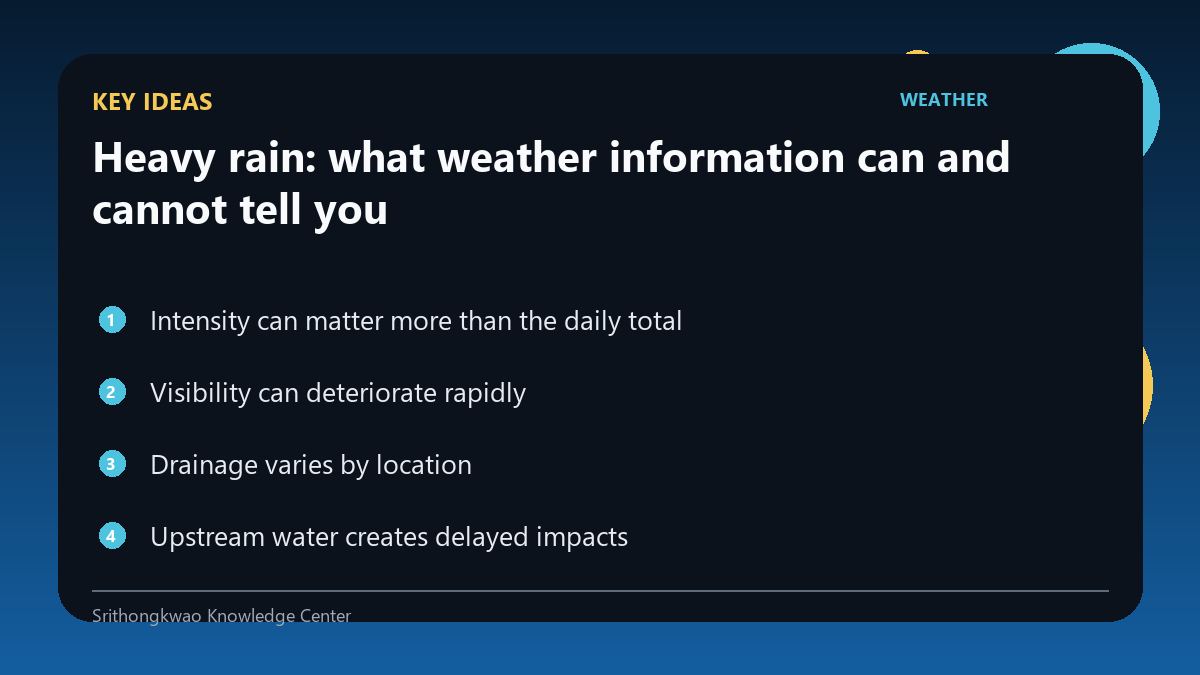
Visibility can deteriorate rapidly
Dense rain can make vehicles, road markings and hazards difficult to see. Traffic spray can worsen the effect.
Drivers should respond to actual visibility and official transport advice.
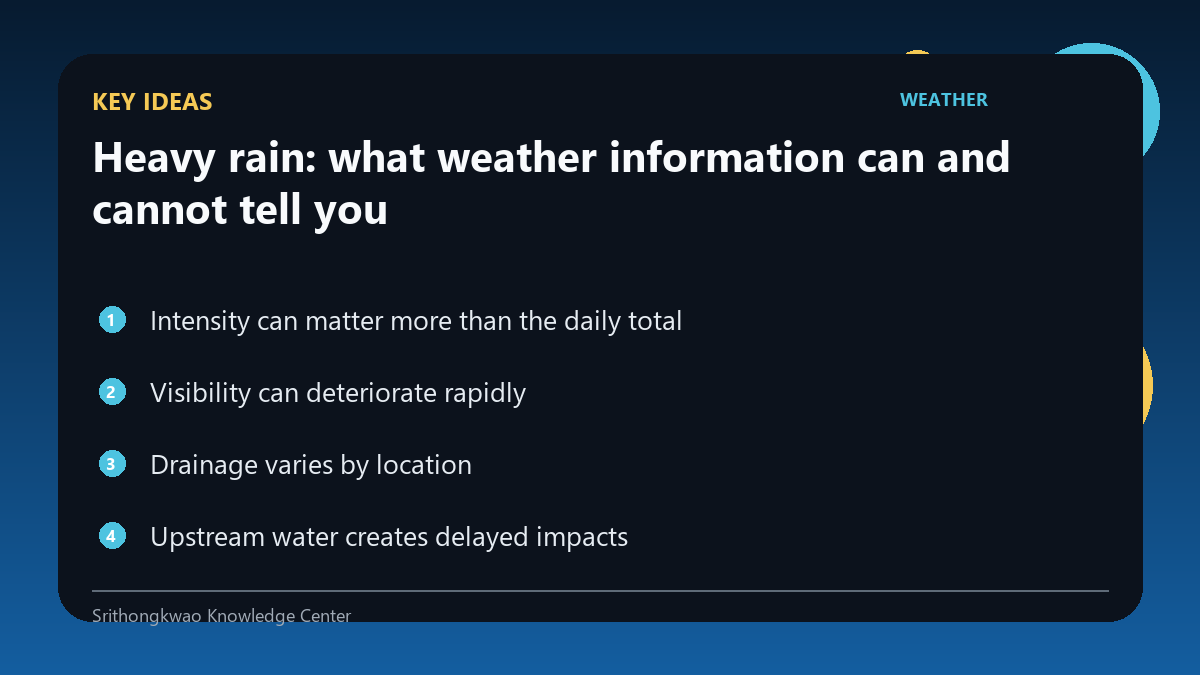
Drainage varies by location
Urban drains, low spots, soil condition and terrain affect how quickly water accumulates.
A forecast cannot guarantee whether a particular street will remain passable.
Upstream water creates delayed impacts
Flooding can occur after local rain has eased if water arrives from upstream catchments or rivers.
Continue monitoring official flood information after the heaviest rain passes.
Warnings provide impact context
Official agencies can combine rainfall, radar, river data and local thresholds when issuing warnings.
Use those warnings rather than inventing a safety threshold from a consumer rainfall number.
Common mistakes to avoid
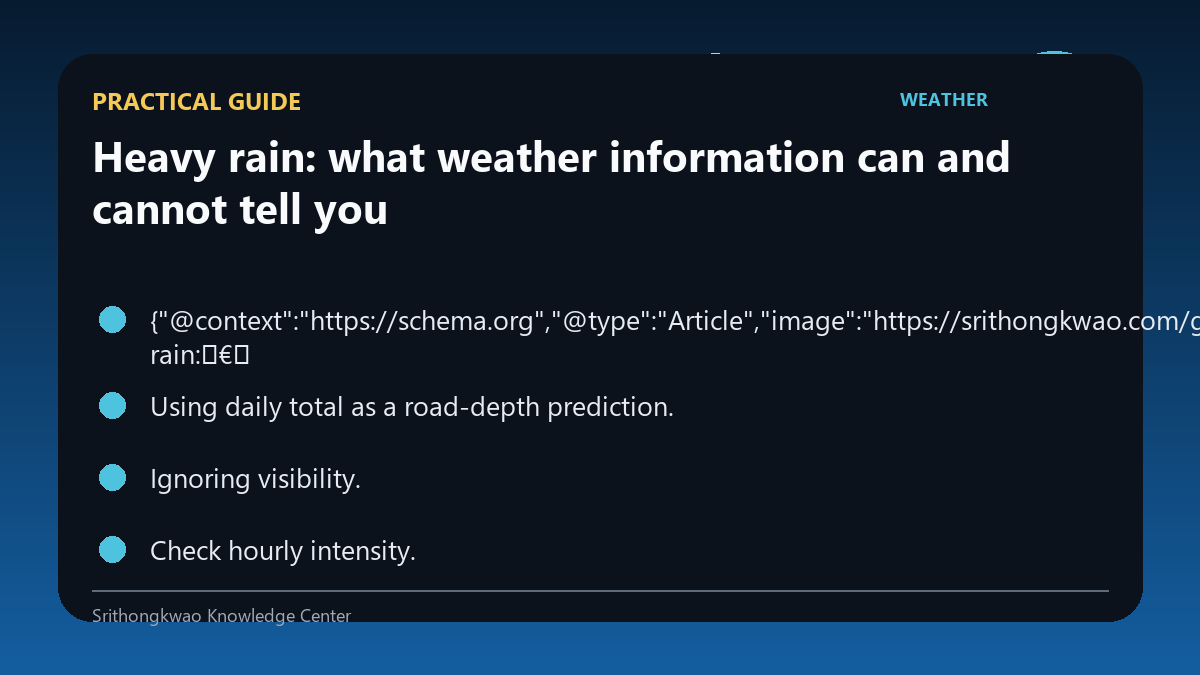
- Assuming rain ending means flood risk is over.
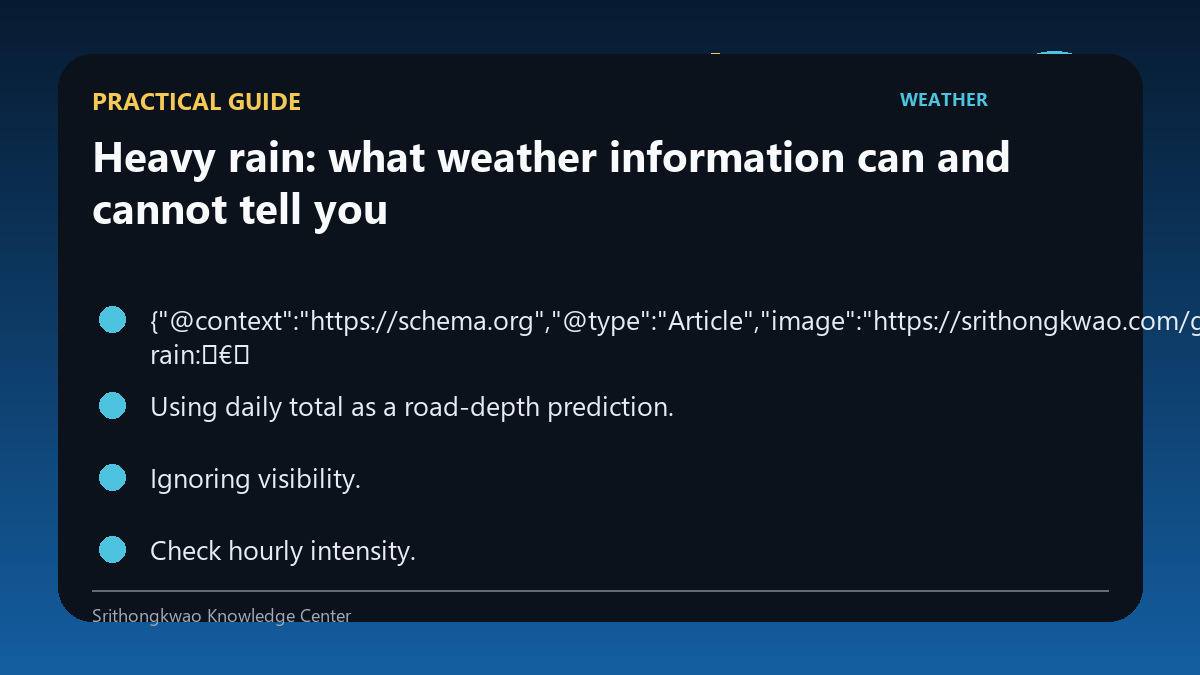
- Using daily total as a road-depth prediction.
- Ignoring visibility.
Practical checklist
- Check hourly intensity.
- Monitor visibility.
- Avoid flooded routes.
- Continue watching after rain eases.
- Follow official flood warnings.
Frequently asked questions
Can light local rain still coincide with flooding?
Yes. Water can arrive from upstream or drainage systems can remain overwhelmed.
Does a forecast show exact street flooding?
No. Street-level impacts depend on drainage, terrain and local conditions.
When should I stop monitoring?
Continue until relevant official flood or emergency information indicates the risk has eased.