How to use this information: Rainfall intensity and duration interact is most useful when it is read with location, update time and the surrounding forecast rather than treated as an isolated number. For everyday planning, compare the current value with the next few hours. When safety is involved, confirm conditions with the responsible meteorological or public-safety authority.
What not to assume: A consumer forecast simplifies a changing atmosphere. Flood awareness: why rainfall alone is not enough should support a decision, not create false precision about an exact street, exact minute or guaranteed outcome.
Rainfall intensity and duration interact
Short intense rain can overwhelm drainage while prolonged rain can saturate soil and raise waterways.
Look at both hourly intensity and accumulated rainfall, then consult official flood information.
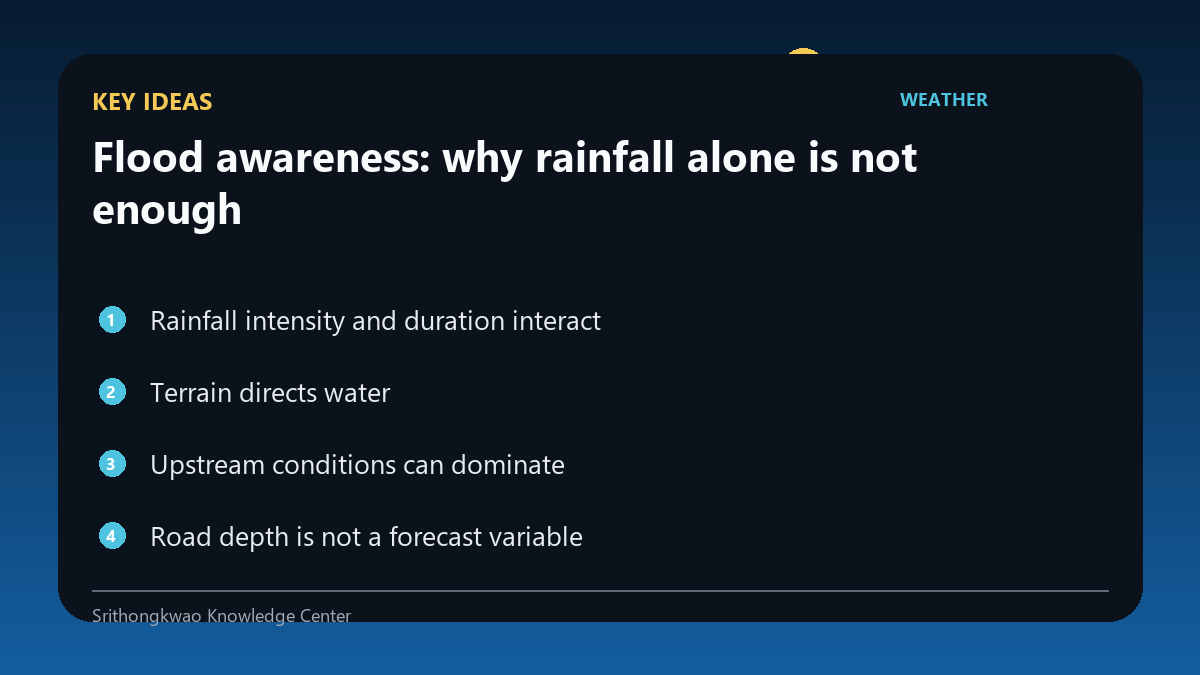
Terrain directs water
Low areas, slopes, channels and urban surfaces determine where water moves and collects.
A city-level weather forecast cannot map every local drainage path.
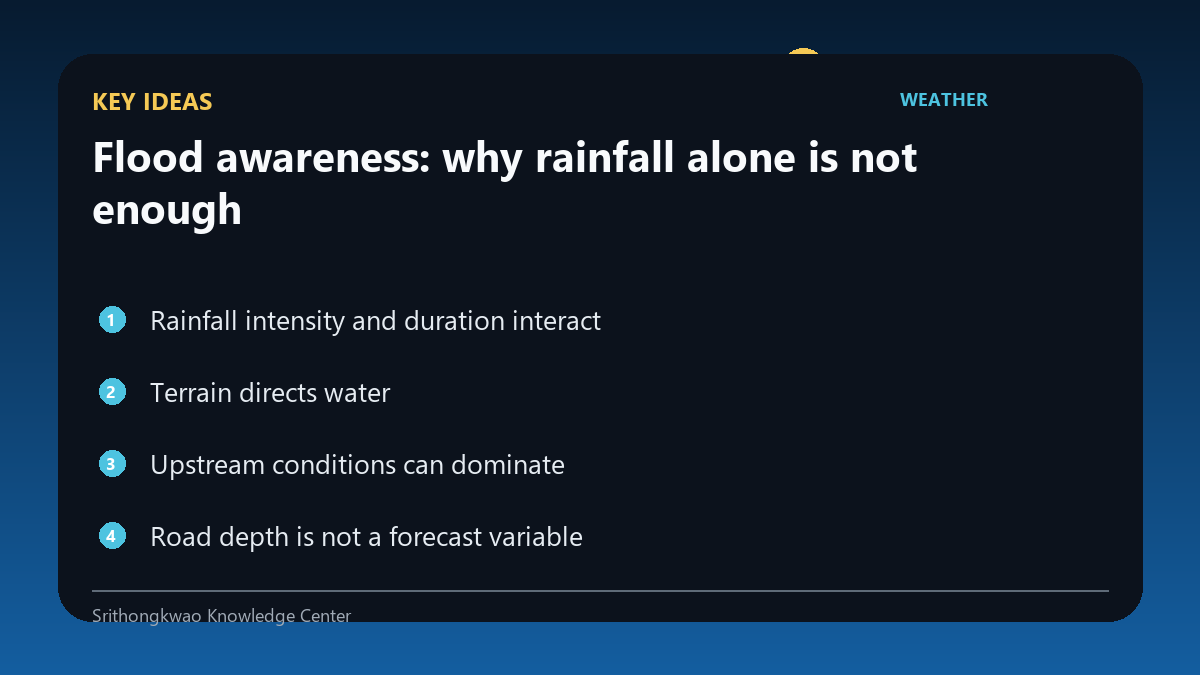
Upstream conditions can dominate
A location can flood even when local rain is light if rivers or catchments upstream deliver additional water.
River and flood-agency information is therefore essential near affected waterways.
Road depth is not a forecast variable
A rainfall amount cannot be converted directly into safe road-water depth. Drainage, flow speed and hidden damage matter.
Never use a weather number as permission to drive through floodwater.
Flood warnings integrate more evidence
Official systems may use gauges, radar, forecasts, drainage knowledge and impact thresholds.
Treat official evacuation, closure and warning messages as the authoritative safety source.
Common mistakes to avoid
- Converting rainfall millimetres into road-water depth.
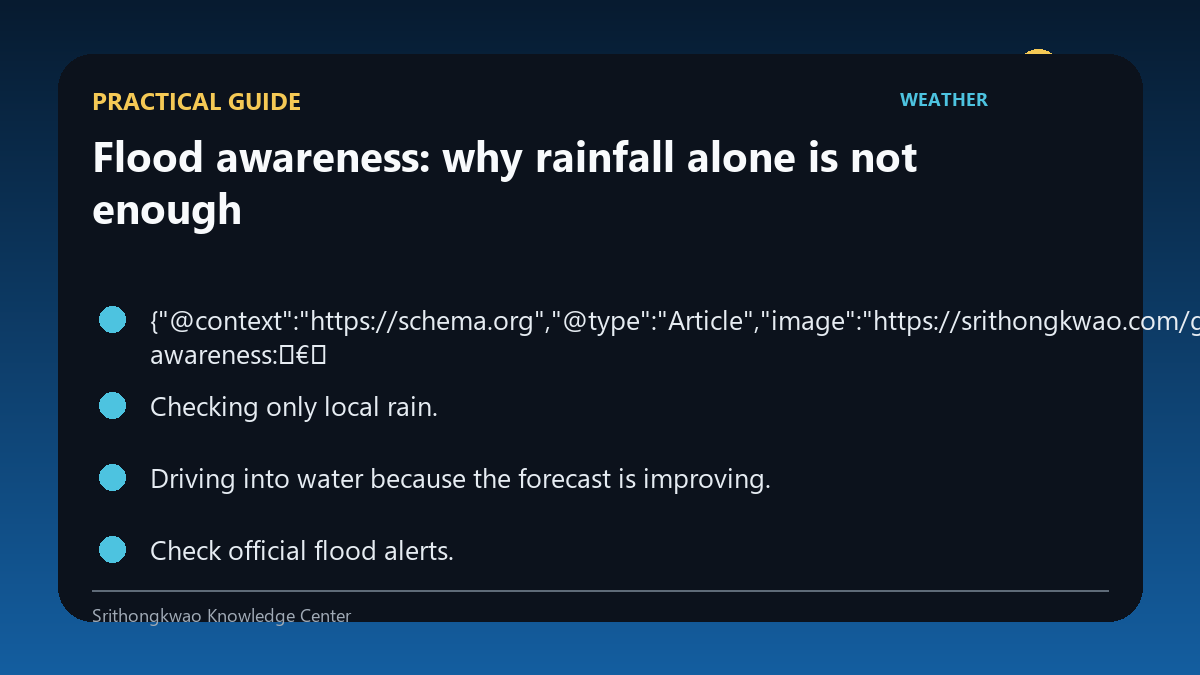
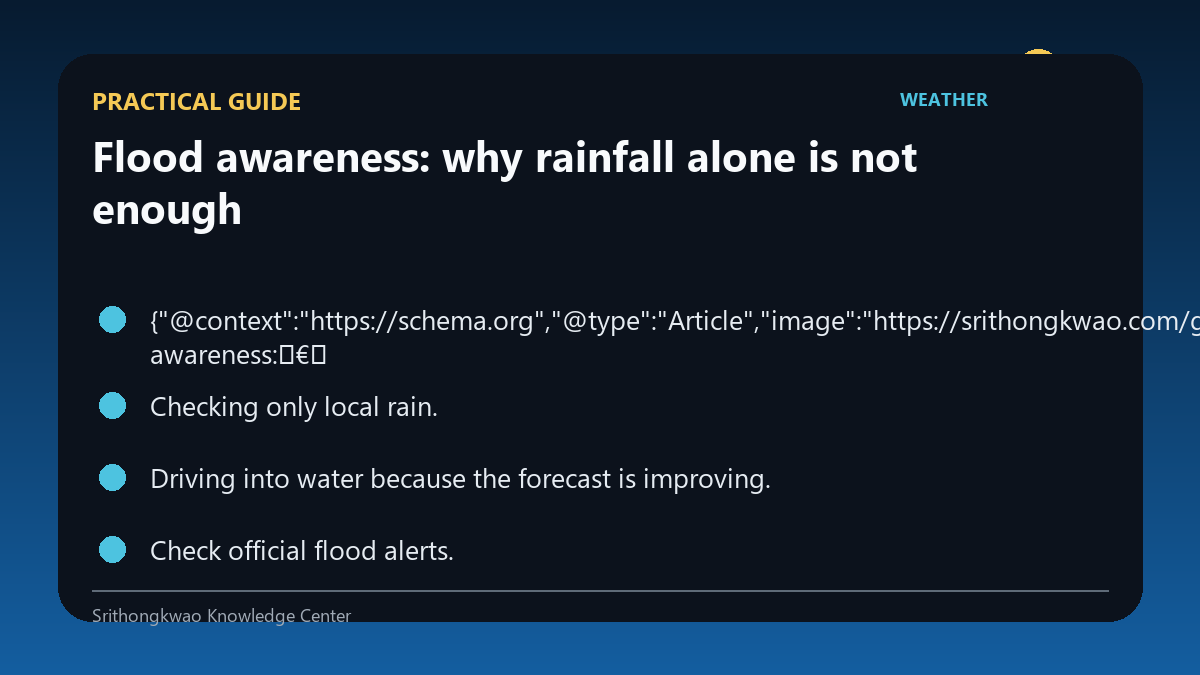
- Checking only local rain.
- Driving into water because the forecast is improving.
Practical checklist
- Check official flood alerts.
- Know low-lying routes.
- Monitor upstream information where relevant.
- Avoid floodwater.
- Keep a backup travel plan.
Frequently asked questions
Can flooding happen after rain stops?
Yes. Runoff and river response can continue after local precipitation ends.
Why can two streets flood differently?
Elevation, drainage and flow paths can differ over very short distances.
Can an app tell me water depth on a road?
A general weather app cannot reliably provide that street-level safety information.