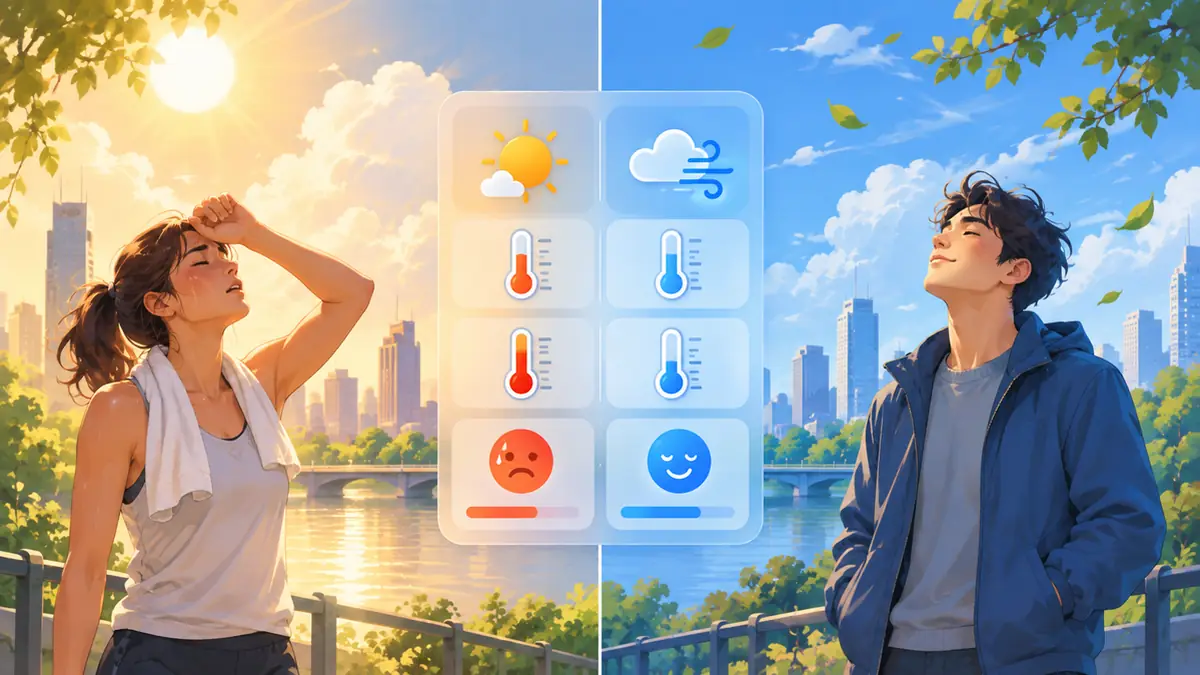
How to use this information: Why there can be two temperature values is most useful when it is read with location, update time and the surrounding forecast rather than treated as an isolated number. For everyday planning, compare the current value with the next few hours. When safety is involved, confirm conditions with the responsible meteorological or public-safety authority.
What not to assume: A consumer forecast simplifies a changing atmosphere. Feels-like temperature: what the estimate is trying to tell you should support a decision, not create false precision about an exact street, exact minute or guaranteed outcome.
Why there can be two temperature values
Air temperature is the standard environmental value, while feels-like or apparent temperature is an estimate built from additional weather factors. The exact method varies by service and conditions.
Read the two values together. A large difference is a cue to inspect humidity, wind or other environmental factors rather than a sign that one value is wrong.
Humidity and warm conditions
When warm air is humid, evaporation from the skin can become less effective. This is one reason humid heat can feel more oppressive than the same air temperature in drier conditions.
Use feels-like information as planning context, especially for time outdoors, but follow official heat guidance when health risk is possible.
Wind and cold conditions
Moving air can increase heat loss from exposed skin in cold weather, making conditions feel colder. Wind also changes comfort in milder conditions even when the thermometer barely changes.
Check wind speed alongside temperature when planning exposed outdoor activities.
Sun exposure is not personal calibration
Direct sunshine can increase how hot an environment feels, while shade can reduce radiant heating. Consumer apparent-temperature values cannot account perfectly for every person's exact sun exposure and clothing.
If you will be in direct sun, consider the real setting rather than assuming the feels-like number fully represents your body.
Why people can still feel different
Age, health, hydration, clothing, exertion and acclimatization influence individual experience. A single apparent-temperature formula cannot personalize all of those differences.
Treat the estimate as environmental context, not as a medical diagnosis or guarantee of comfort.
Common mistakes to avoid
- Assuming feels-like is a second physical thermometer reading.
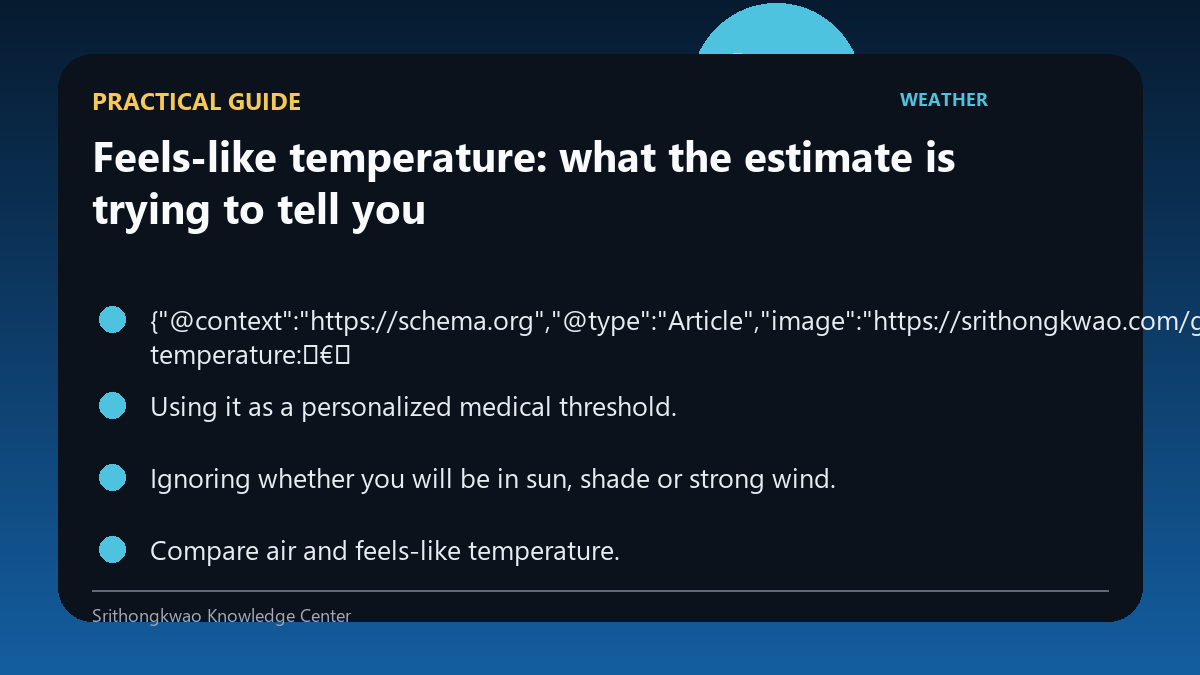
- Using it as a personalized medical threshold.
- Ignoring whether you will be in sun, shade or strong wind.
Practical checklist
- Compare air and feels-like temperature.
- Check humidity and wind.
- Consider your activity and exposure.
- Refresh when conditions change.
- Use official health guidance for extremes.
Frequently asked questions
Is feels-like measured directly?
Usually it is an estimate derived from weather variables rather than a second direct air-temperature measurement.
Why can two people feel the same weather differently?
Clothing, activity, health, hydration and personal tolerance vary.
Should I ignore air temperature if feels-like is shown?
No. The two values answer different questions and are most useful together.