User control: Retention should match purpose should be explained in plain language before a user is expected to make a privacy or permission choice. A permission can often be denied, limited or changed later through browser or Android settings.
Data-minimization principle: Data retention: why information should not be kept forever by default should use only the information needed for the stated purpose. Users should avoid sharing secrets or unrelated personal information simply because a form, screenshot or upload makes it technically possible.
Retention should match purpose
Account data may need to exist while an account is active, while a temporary image used for processing may need much shorter storage.
Different data types should not automatically share one unlimited retention period.
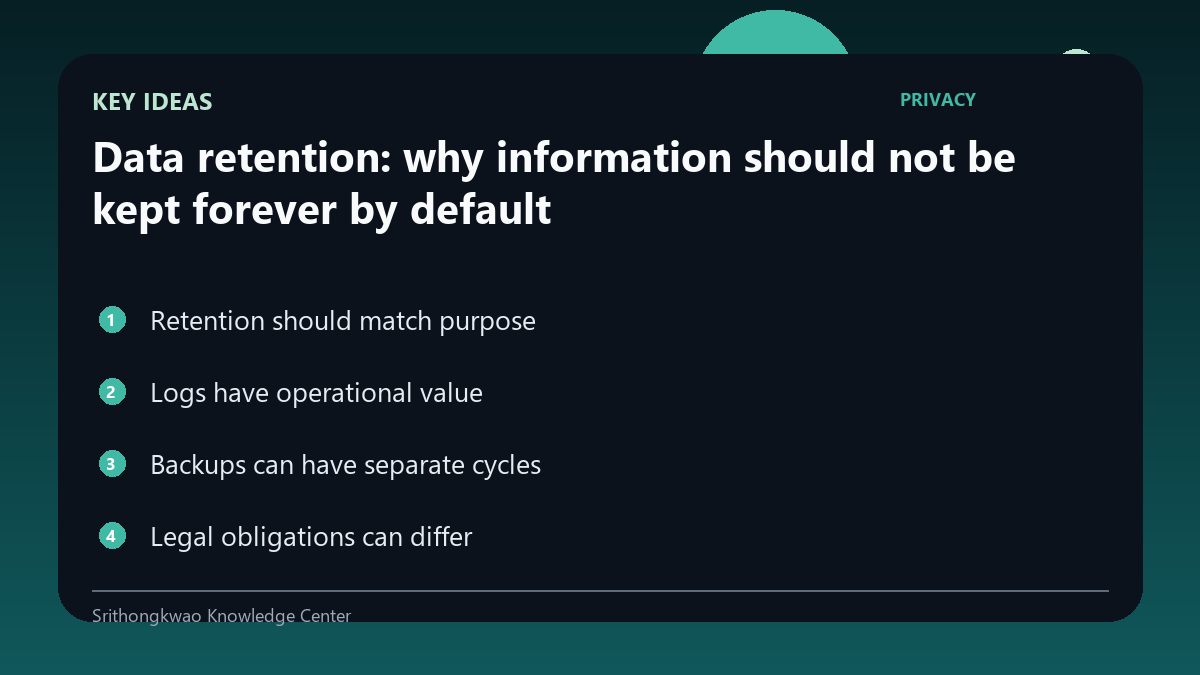
Logs have operational value
Error and security logs can support debugging and abuse prevention.
They should still have access controls and a defined retention rationale.
Backups can have separate cycles
Deleted active data may remain temporarily in protected backups until the backup rotation expires.
Privacy documentation should avoid promising instant physical erasure from every backup if the system cannot deliver it.
Legal obligations can differ
Some records may need to be retained for legal, accounting or security reasons depending on service and jurisdiction.
Those obligations should be distinguished from optional product analytics.
Review old data periodically
A system can accumulate data that no current feature needs.
Retention reviews help remove obsolete copies and reduce risk.
Common mistakes to avoid
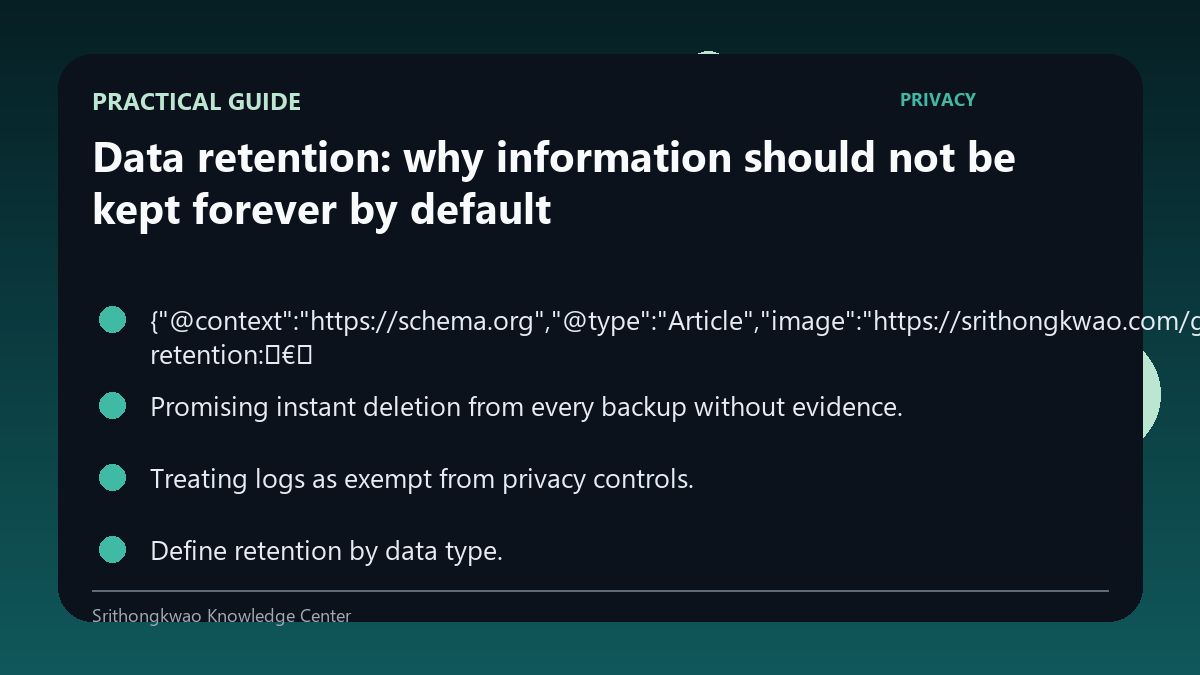
- Keeping everything forever.
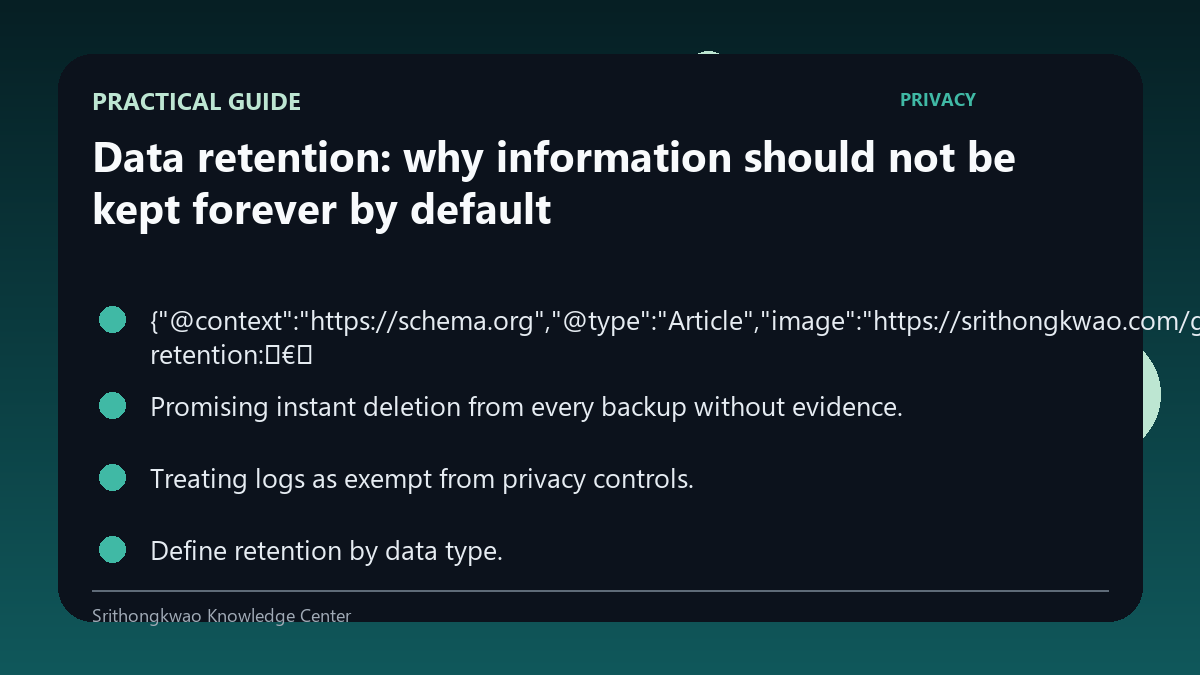
- Promising instant deletion from every backup without evidence.
- Treating logs as exempt from privacy controls.
Practical checklist
- Define retention by data type.
- Protect logs.
- Document backup cycle.
- Separate legal obligations.
- Review obsolete data.
Frequently asked questions
Why not keep data forever?
Longer retention increases the amount of information exposed to future risk.
Can deleted data remain in backups?
It can remain temporarily depending on backup rotation and system design.
Should logs have retention limits?
Yes, based on operational and security needs.