
User control: The service must identify the data should be explained in plain language before a user is expected to make a privacy or permission choice. A permission can often be denied, limited or changed later through browser or Android settings.
Data-minimization principle: How data deletion requests work in practice should use only the information needed for the stated purpose. Users should avoid sharing secrets or unrelated personal information simply because a form, screenshot or upload makes it technically possible.
The service must identify the data
A request should name the product and account or context involved.
Providing the right scope helps avoid deleting the wrong record.
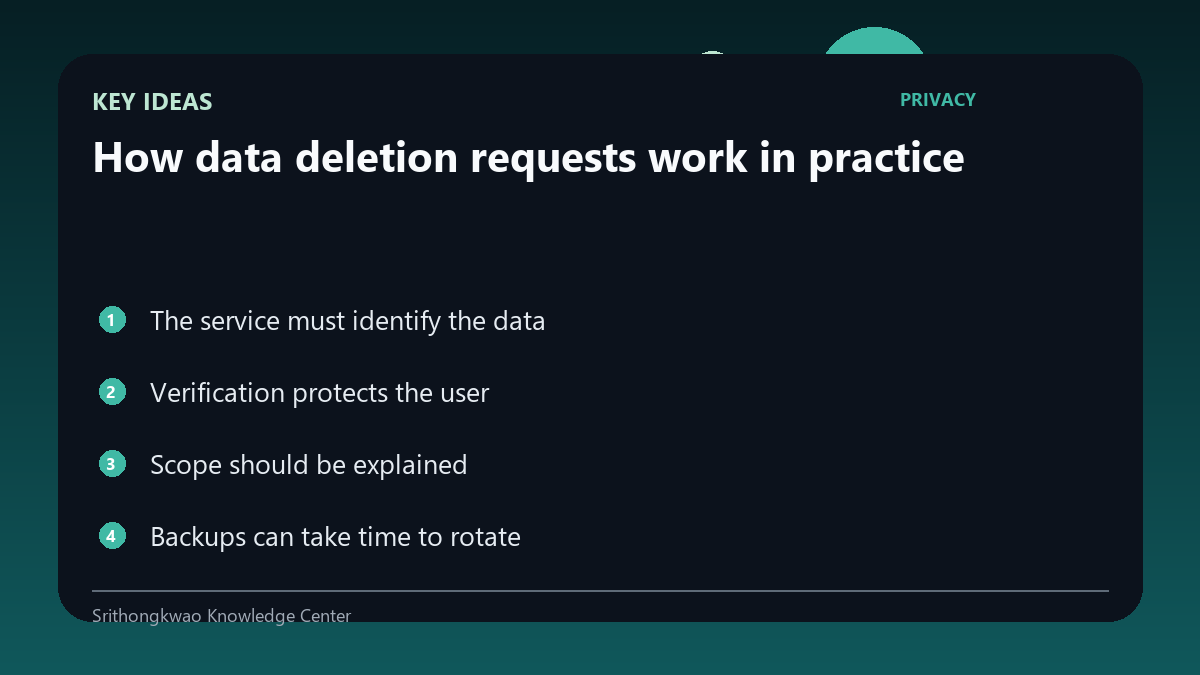
Verification protects the user
Before deleting account data, the service may need to verify that the requester controls the relevant account.
Verification should use safe methods rather than asking for a password in plain text.
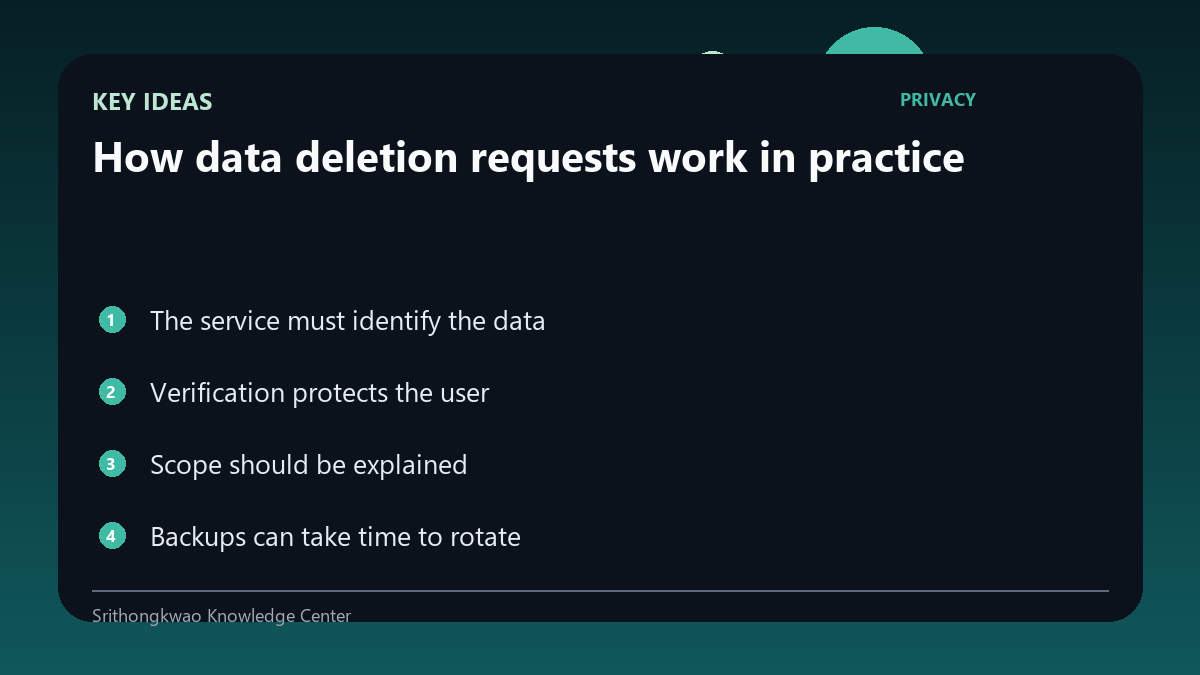
Scope should be explained
Account deletion, uploaded-content deletion and marketing opt-out can be different actions.
A clear response tells the user which data is covered.
Backups can take time to rotate
Protected backups may retain deleted data temporarily until scheduled expiration.
This should be explained honestly instead of promising impossible instant removal.
Some records can have lawful retention
Legal or security obligations may require limited records to remain for a defined reason.
Any exception should be narrow and documented.
Common mistakes to avoid
- Deleting data without verifying the requester.
- Treating unsubscribe as account deletion.
- Making absolute backup promises the system cannot meet.
Practical checklist
- Name the product.
- Verify safely.
- Clarify scope.
- Explain timing.
- Document lawful exceptions.
Frequently asked questions
Is unsubscribing the same as deleting an account?
No. Marketing preference and account-data deletion are different actions.
Why verify a deletion request?
It prevents another person from deleting data they do not control.
Can backups disappear immediately?
That depends on the backup lifecycle; honest policies should explain the process.