
User control: Start from the feature purpose should be explained in plain language before a user is expected to make a privacy or permission choice. A permission can often be denied, limited or changed later through browser or Android settings.
Data-minimization principle: Data minimization: share and collect only what is needed should use only the information needed for the stated purpose. Users should avoid sharing secrets or unrelated personal information simply because a form, screenshot or upload makes it technically possible.
Start from the feature purpose
Define the minimum information required to deliver the requested function.
Do not add fields simply because a database can store them.
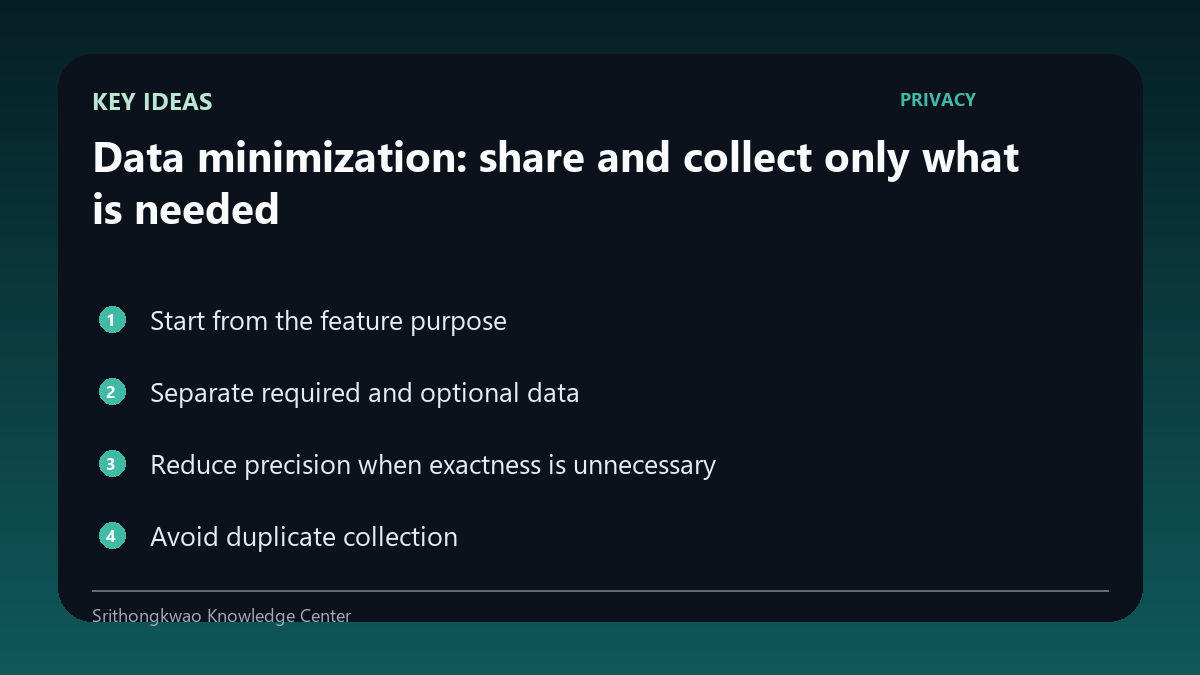
Separate required and optional data
Users should be able to see which information is necessary and which improves convenience.
Optional fields should not silently become mandatory.
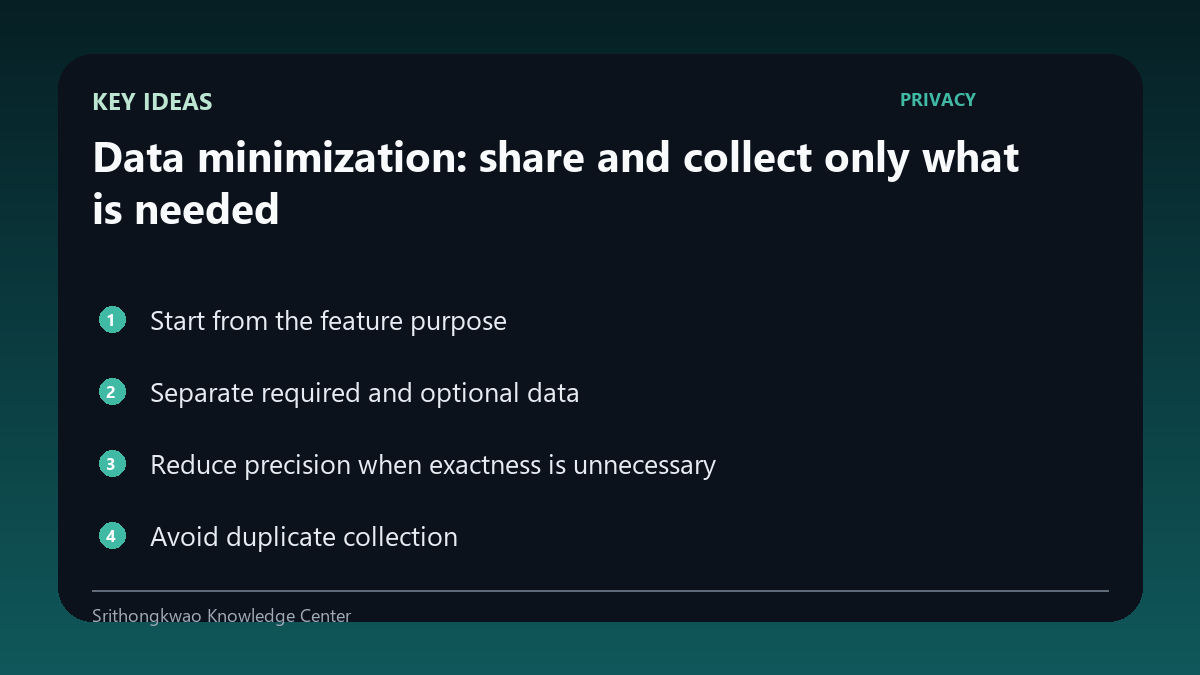
Reduce precision when exactness is unnecessary
A city may be enough for weather when exact coordinates are not required.
Choose the least detailed data that still supports the task.
Avoid duplicate collection
If the product already has a reliable value, repeatedly asking the user to submit it creates more copies and more risk.
Reuse appropriate data securely rather than multiplying it.
Delete temporary material
Uploads and diagnostic artifacts created only for processing should not persist without a reason.
Retention rules should match the purpose.
Common mistakes to avoid
- Collecting data just in case.
- Making optional fields mandatory.
- Keeping temporary copies forever.
Practical checklist
- Define purpose.
- Mark required fields.
- Reduce precision.
- Avoid duplicates.
- Delete temporary data when no longer needed.
Frequently asked questions
Why is less data safer?
It reduces the amount that can be exposed or misused.
Does minimization mean a product cannot personalize?
No. It means personalization should use only data reasonably needed for the stated experience.
Should diagnostic files be permanent?
Not by default; retention should follow a defined operational purpose.