
User control: Purpose should be specific should be explained in plain language before a user is expected to make a privacy or permission choice. A permission can often be denied, limited or changed later through browser or Android settings.
Data-minimization principle: Consent choices: making privacy decisions understandable should use only the information needed for the stated purpose. Users should avoid sharing secrets or unrelated personal information simply because a form, screenshot or upload makes it technically possible.
Purpose should be specific
A consent screen should explain why data or advertising technology is being used.
Vague wording such as improve everything makes a decision harder to understand.
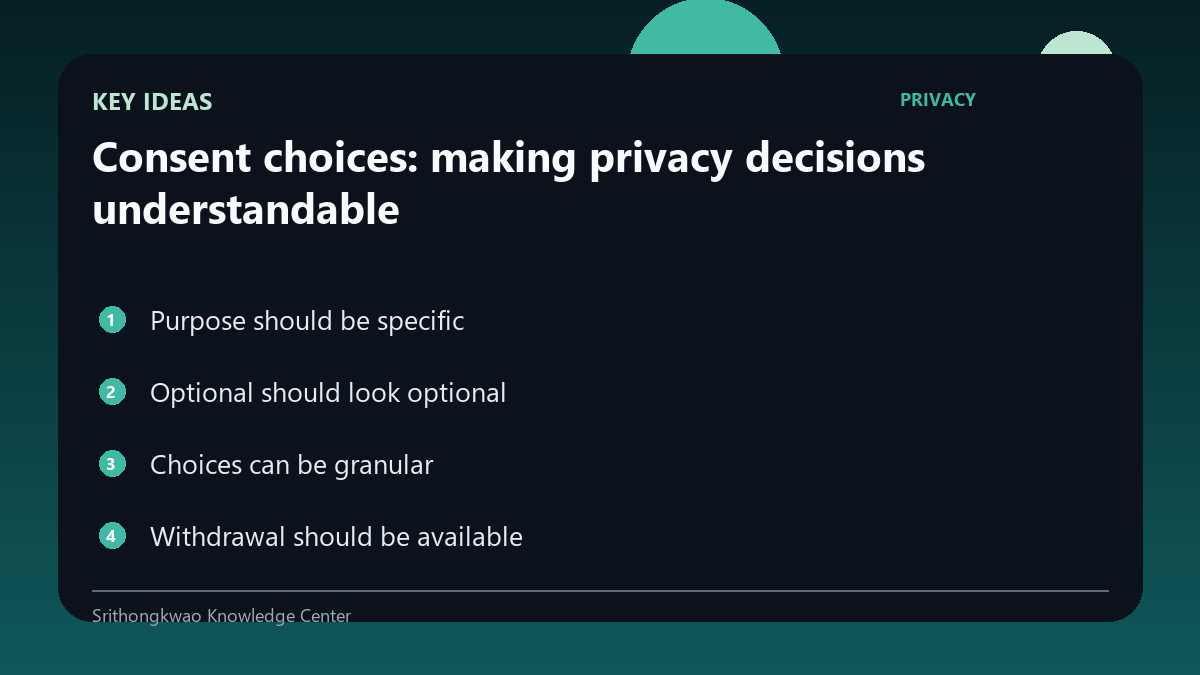
Optional should look optional
A user should not be misled into believing optional processing is required for a feature that can work without it.
Buttons and wording should not manipulate users through false urgency.
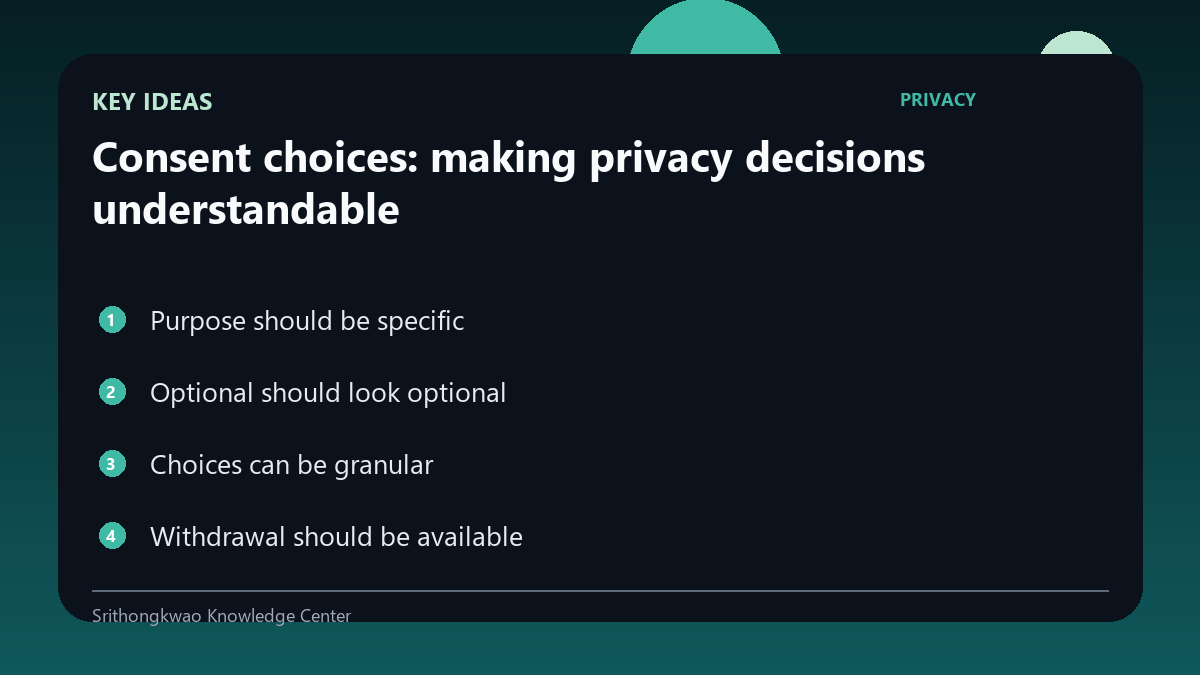
Choices can be granular
Advertising, analytics and product functionality may have different legal or operational bases.
Where appropriate, separate choices instead of combining unrelated purposes.
Withdrawal should be available
If processing relies on a revocable consent choice, users need a route to change that choice.
Privacy options should not be hidden after the first launch.
Consent is not a substitute for minimization
Receiving permission does not mean a product should collect every technically available data point.
Collect only what is needed for the stated purpose.
Common mistakes to avoid
- Using vague purposes.
- Making optional choices look mandatory.
- Treating consent as permission to collect everything.
Practical checklist
- Explain each purpose.
- Separate optional choices.
- Provide privacy settings.
- Respect withdrawal.
- Minimize data.
Frequently asked questions
Can I change a consent choice later?
Where consent is the basis for optional processing, products should provide an appropriate way to update that choice.
Does consent mean unlimited data collection?
No. Purpose limitation and data minimization still matter.
Why separate purposes?
Users can make more meaningful choices when unrelated processing is not bundled together.