
How to use this information: Define the weather-sensitive parts is most useful when it is read with location, update time and the surrounding forecast rather than treated as an isolated number. For everyday planning, compare the current value with the next few hours. When safety is involved, confirm conditions with the responsible meteorological or public-safety authority.
What not to assume: A consumer forecast simplifies a changing atmosphere. Weather planning for outdoor events should support a decision, not create false precision about an exact street, exact minute or guaranteed outcome.
Define the weather-sensitive parts
A market stall, stage, electrical setup, guest seating and parking area can have different vulnerabilities. Identify what rain, wind, heat or lightning would affect.
Build the weather checklist around the event setup instead of using one generic pass or fail rule.
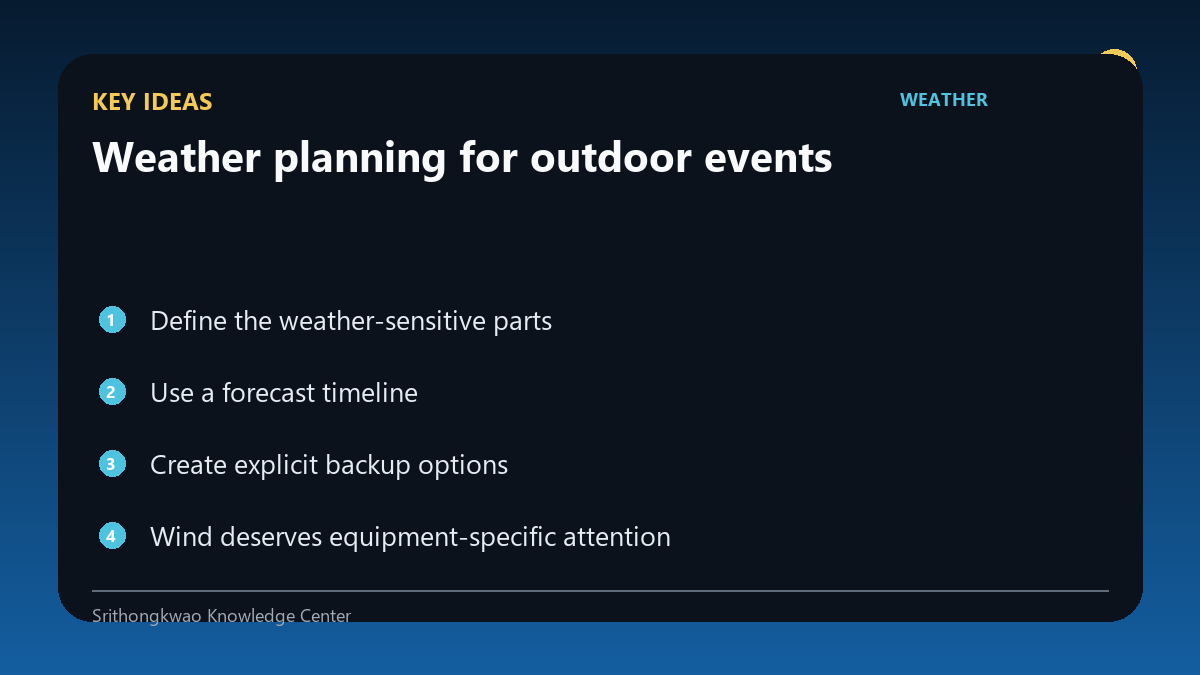
Use a forecast timeline
Check the multi-day pattern early, the hourly forecast closer to the date and short-term observations on the day.
This staged approach gives enough time for logistics while still using fresher information near the event.
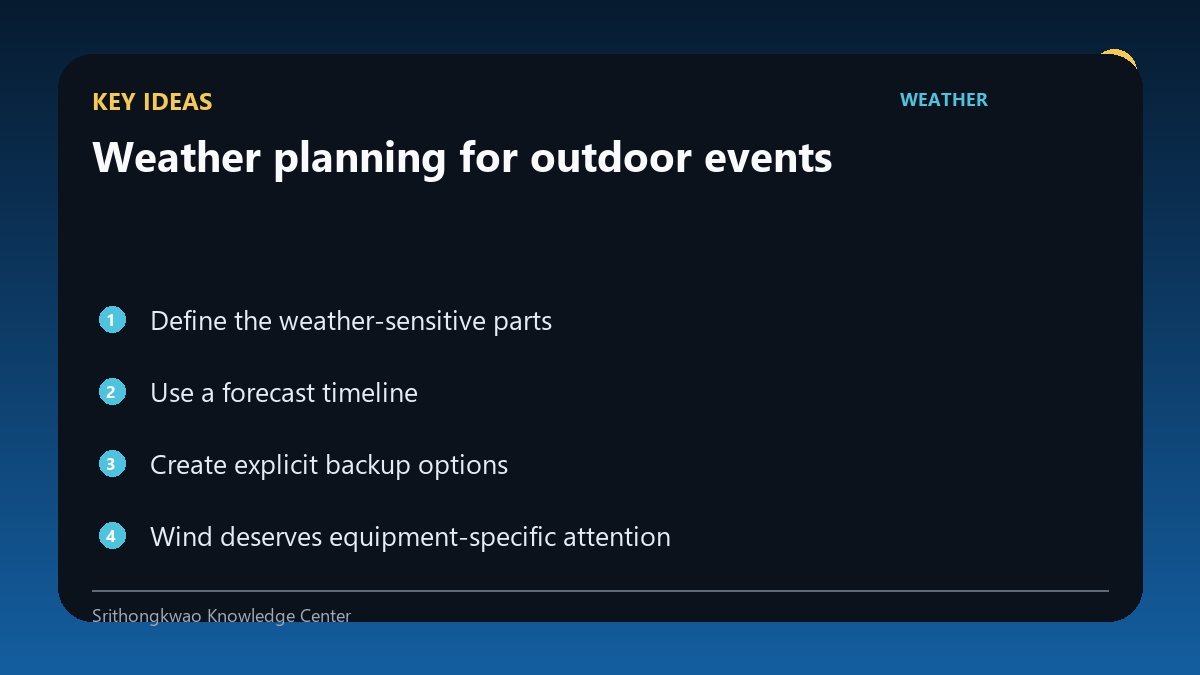
Create explicit backup options
A covered location, delayed start, indoor alternative or cancellation rule is easier to use when it is decided before pressure builds.
Write down who makes the decision and what information triggers the next step.
Wind deserves equipment-specific attention
Tents, signs, decorations and temporary structures can be more sensitive to gusts than attendees are.
Follow manufacturer, venue and professional safety limits rather than inventing a wind threshold from a consumer app.
Lightning and warnings override convenience
An event schedule should never be protected at the expense of basic safety. Official warnings and lightning guidance take priority over attendance or sunk costs.
If authorities issue a warning, use the emergency plan rather than debating the event based on an old forecast.
Common mistakes to avoid
- Checking weather only on event morning.
- Having no backup decision owner.
- Using app wind numbers instead of equipment safety limits.
Practical checklist
- Identify weather-sensitive elements.
- Check forecasts at planned intervals.
- Prepare a backup venue or timing.
- Assign decision responsibility.
- Follow official warnings.
Frequently asked questions
How early should I check?
Use multi-day forecasts for early planning and more frequent hourly checks as the event approaches.
Can I set my own tent wind limit from the app?
Use manufacturer, venue or professional guidance for temporary structures.
What if the forecast improves after a warning?
Follow the current official warning status and responsible authority guidance.