
How to use this information: Several days out: identify the pattern is most useful when it is read with location, update time and the surrounding forecast rather than treated as an isolated number. For everyday planning, compare the current value with the next few hours. When safety is involved, confirm conditions with the responsible meteorological or public-safety authority.
What not to assume: A consumer forecast simplifies a changing atmosphere. Weather travel planning: from several days out to departure time should support a decision, not create false precision about an exact street, exact minute or guaranteed outcome.
Several days out: identify the pattern
Use the daily forecast to see whether the trip falls in a warm, cool, wet or unsettled period.
At this stage, focus on broad flexibility rather than exact hourly timing.
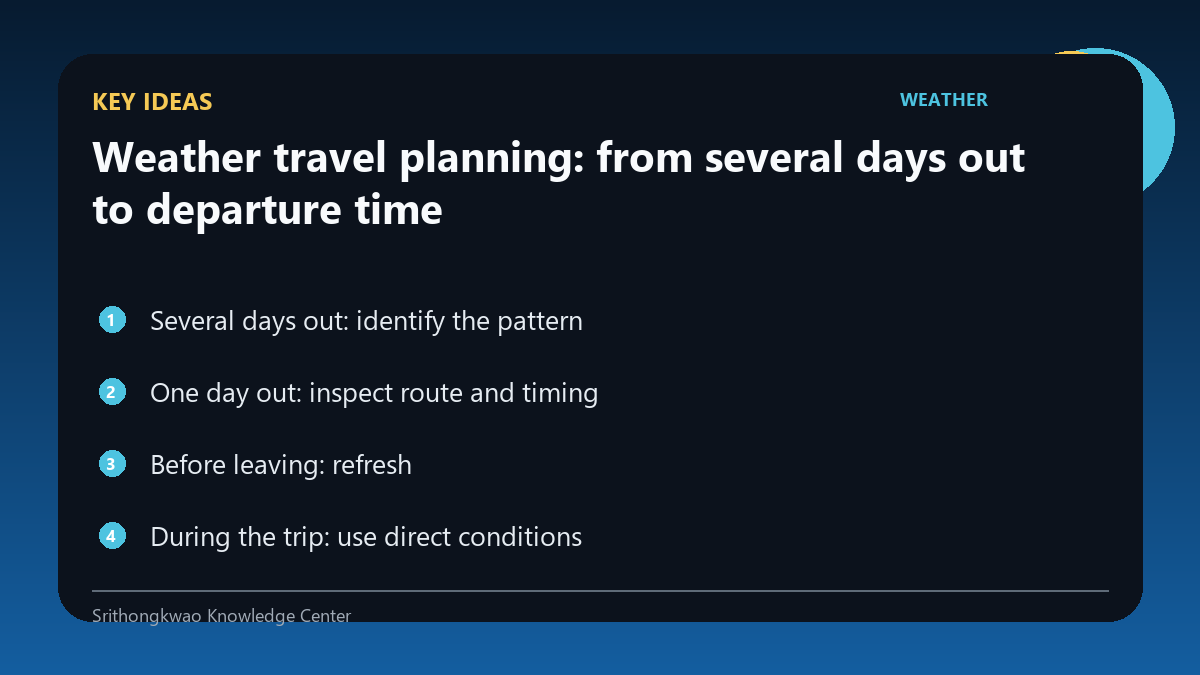
One day out: inspect route and timing
Check the departure point, destination and major route segments. Open the hourly forecast for the planned travel window.
Adjust departure time or packing if a clearer weather pattern has emerged.
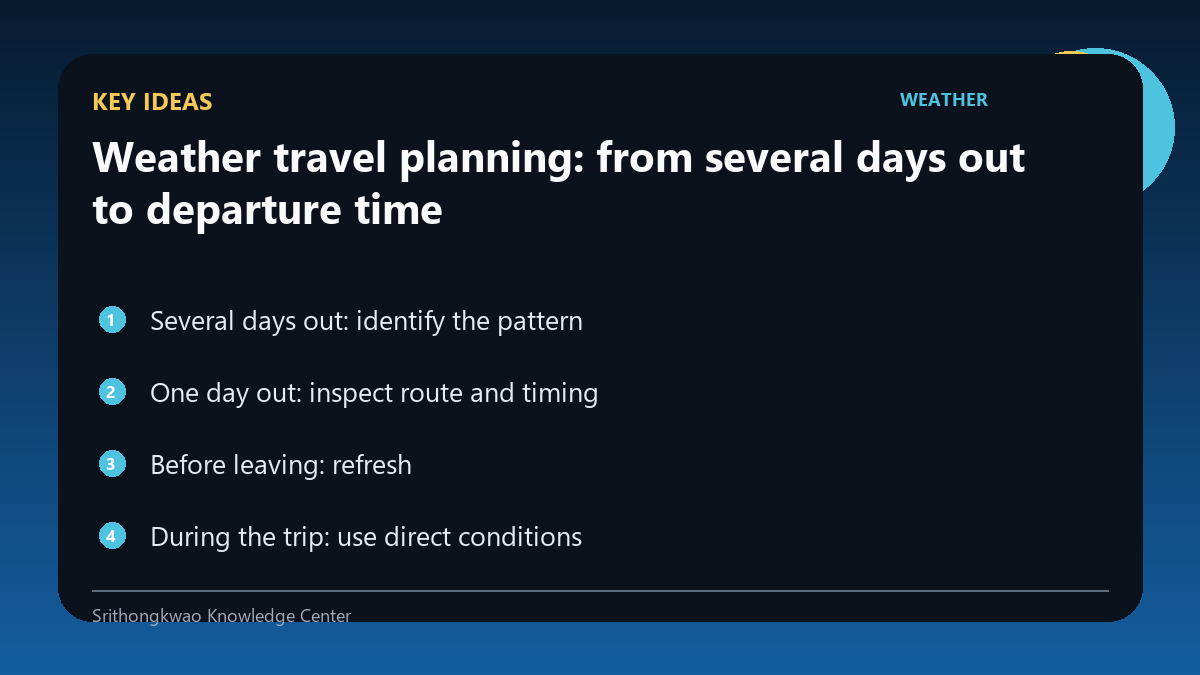
Before leaving: refresh
Weather can shift after an overnight forecast. Refresh current conditions, warnings and short-term information.
Do not begin a weather-sensitive trip using only a screenshot from the previous day.
During the trip: use direct conditions
Rain, fog, wind and road hazards can vary along the route.
Follow road conditions, closures and official transport information rather than forcing the original plan.
Build alternatives
An alternate route, flexible departure or extra time reduces the pressure to continue when conditions deteriorate.
A good weather plan includes what you will do if the forecast is wrong.
Common mistakes to avoid
- Checking only the destination.
- Using a multi-day forecast as an exact departure-time prediction.
- Having no alternate plan.
Practical checklist
- Check broad pattern early.
- Review route weather.
- Refresh before departure.
- Watch official notices.
- Keep a backup route or time.
Frequently asked questions
How early should I start checking?
Several days ahead is useful for broad planning, with more detailed checks closer to departure.
Should I rely on one city forecast for a long route?
No. Conditions can differ substantially along the journey.
What if the forecast changes during travel?
Use the newest information and direct road conditions, and change plans when safety requires it.