User control: Passwords should remain private should be explained in plain language before a user is expected to make a privacy or permission choice. A permission can often be denied, limited or changed later through browser or Android settings.
Data-minimization principle: Passwords and one-time codes: information you should never send should use only the information needed for the stated purpose. Users should avoid sharing secrets or unrelated personal information simply because a form, screenshot or upload makes it technically possible.
Passwords should remain private
A support agent can diagnose many issues from logs, account identifiers and error messages without learning the password.
Never include a password in screenshots, email or chat.
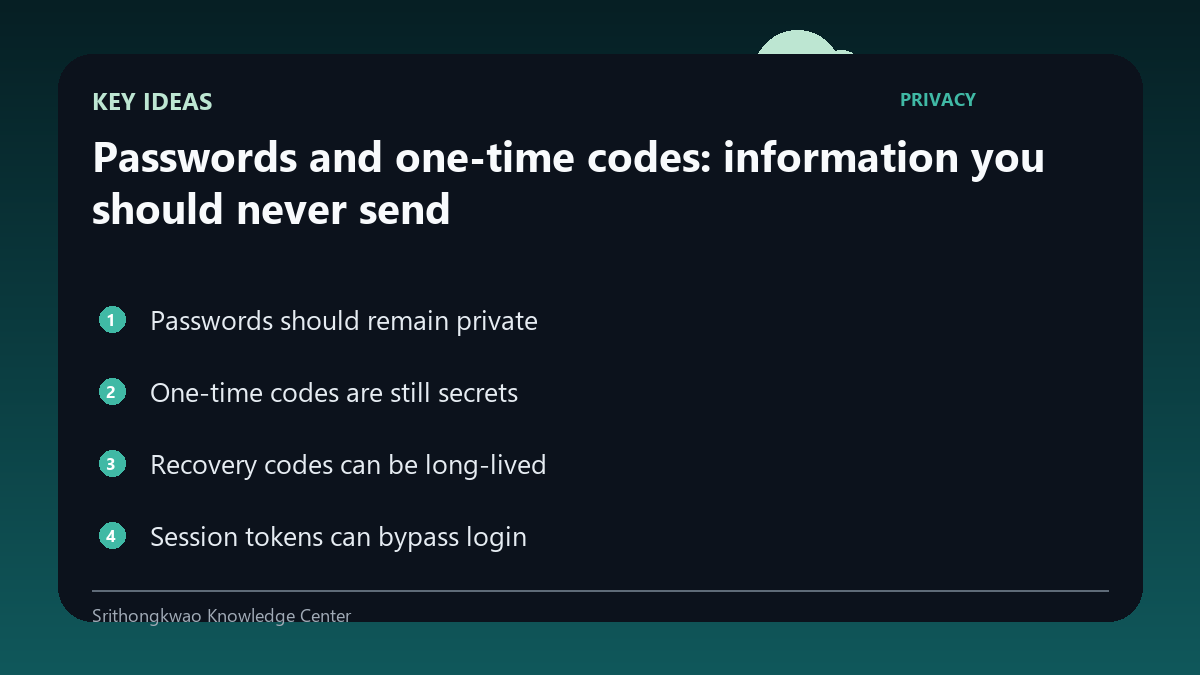
One-time codes are still secrets
An OTP may expire quickly, but during its valid period it can authorize a sign-in or sensitive action.
Do not forward a code to someone who contacted you unexpectedly.
Recovery codes can be long-lived
Backup codes are often designed for use when normal authentication is unavailable.
Store them securely and do not treat them as disposable text.
Session tokens can bypass login
Developer logs or browser tools can expose tokens that represent an authenticated session.
Redact tokens from debugging evidence and revoke them if exposed.
Legitimate support should use safe verification
Account support can use established recovery procedures rather than asking for live secrets.
If a message requests a code, verify the official process independently.
Common mistakes to avoid
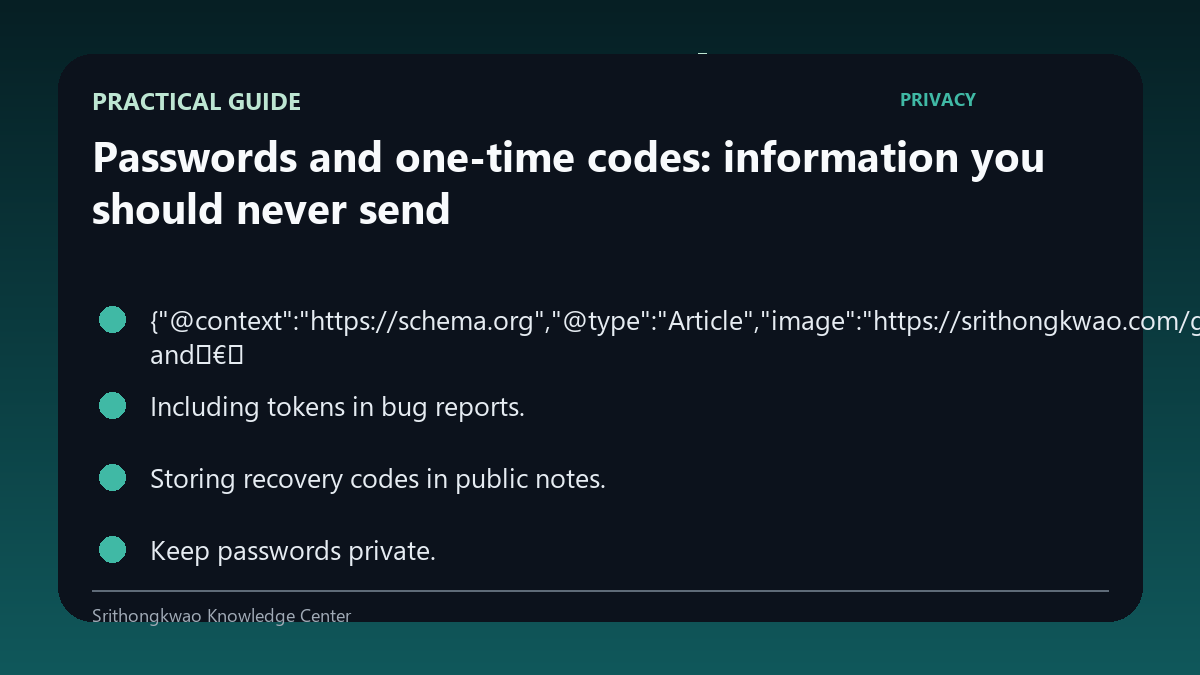
- Sending an OTP to a stranger claiming to be support.
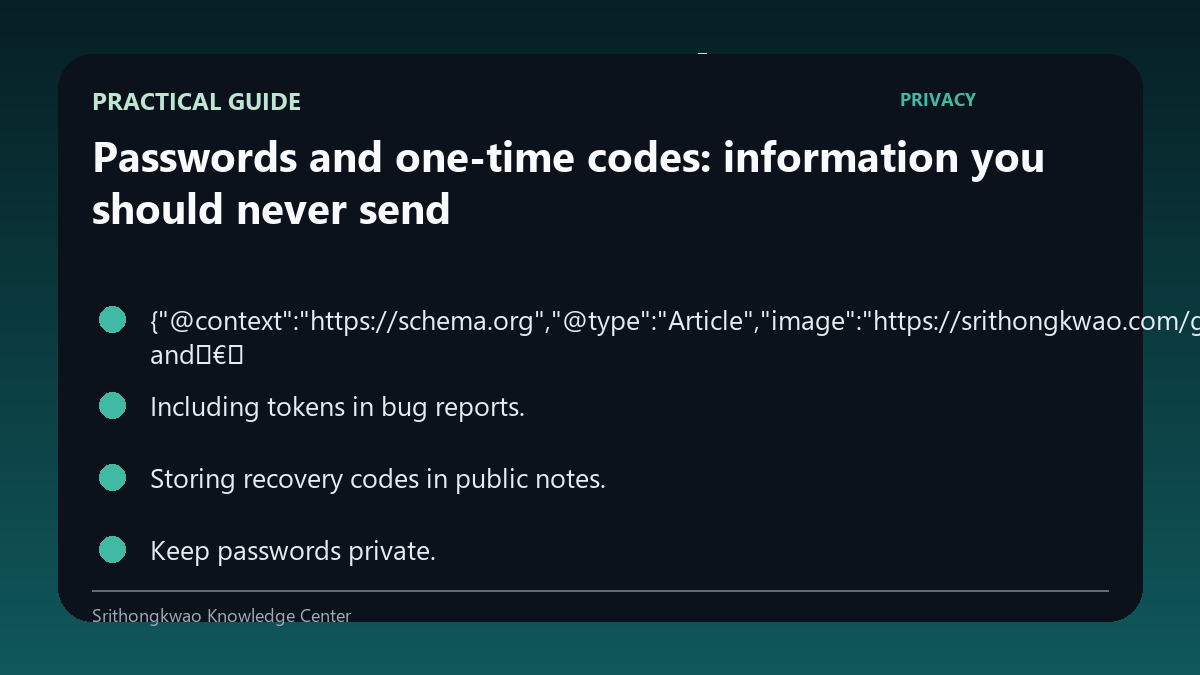
- Including tokens in bug reports.
- Storing recovery codes in public notes.
Practical checklist
- Keep passwords private.
- Never forward OTPs.
- Secure recovery codes.
- Redact tokens.
- Use official recovery processes.
Frequently asked questions
Is an OTP safe to share after it expires?
There is usually no reason to share it; keep authentication codes out of support messages.
What is a session token?
It is a technical credential that can represent an authenticated session.
Should support ask for my password?
Ordinary support should not need it.