
User control: An advertising identifier is a technical signal should be explained in plain language before a user is expected to make a privacy or permission choice. A permission can often be denied, limited or changed later through browser or Android settings.
Data-minimization principle: Advertising identifiers: what they are and why consent matters should use only the information needed for the stated purpose. Users should avoid sharing secrets or unrelated personal information simply because a form, screenshot or upload makes it technically possible.
An advertising identifier is a technical signal
Mobile advertising ecosystems can use resettable or platform-controlled identifiers and app/device information for measurement and ad delivery.
The exact data used depends on platform settings, consent and the advertising service.
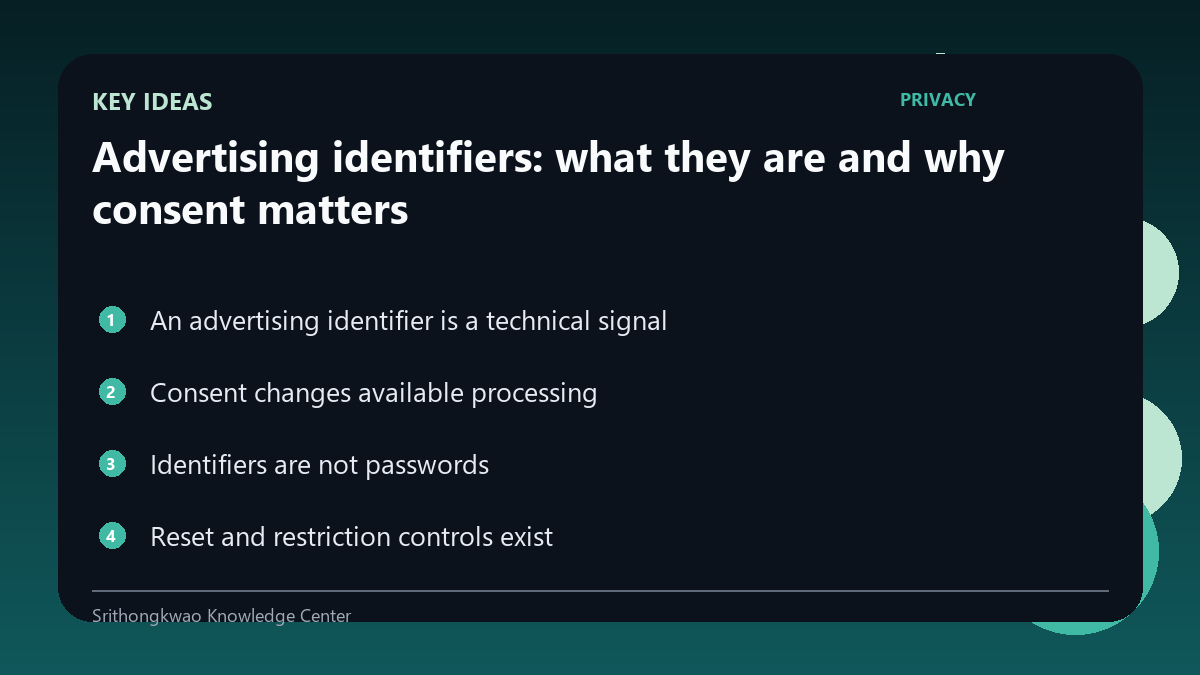
Consent changes available processing
Regions and users can have different consent requirements and choices.
A product should integrate recognized consent flows rather than assuming every visitor accepts personalized advertising.
Identifiers are not passwords
Advertising IDs should not be treated like account credentials, but they still relate to user privacy and tracking choices.
Handle them according to platform rules and privacy disclosures.
Reset and restriction controls exist
Operating systems and account settings may allow users to reset, limit or modify advertising-related preferences.
Product behaviour should tolerate those changes without breaking core non-ad functionality.
Ads should not dictate sensitive decisions
Advertising technology should remain separate from high-stakes inference about health, identity or other sensitive traits.
A privacy-aware product limits advertising use to appropriate purposes.
Common mistakes to avoid
- Calling an advertising ID a person's legal identity.
- Ignoring consent requirements.
- Breaking core functionality when ad preferences change.
Practical checklist
- Use proper consent flow.
- Explain ad-related data.
- Respect platform controls.
- Separate ads from sensitive inference.
- Keep core product usable.
Frequently asked questions
Is an advertising ID the same as my account password?
No. It is a technical advertising-related identifier, not an authentication secret.
Can users change ad preferences?
Platforms and consent systems can provide controls that products should respect.
Should ad data be used to infer sensitive traits?
Responsible products should avoid inappropriate sensitive inference.