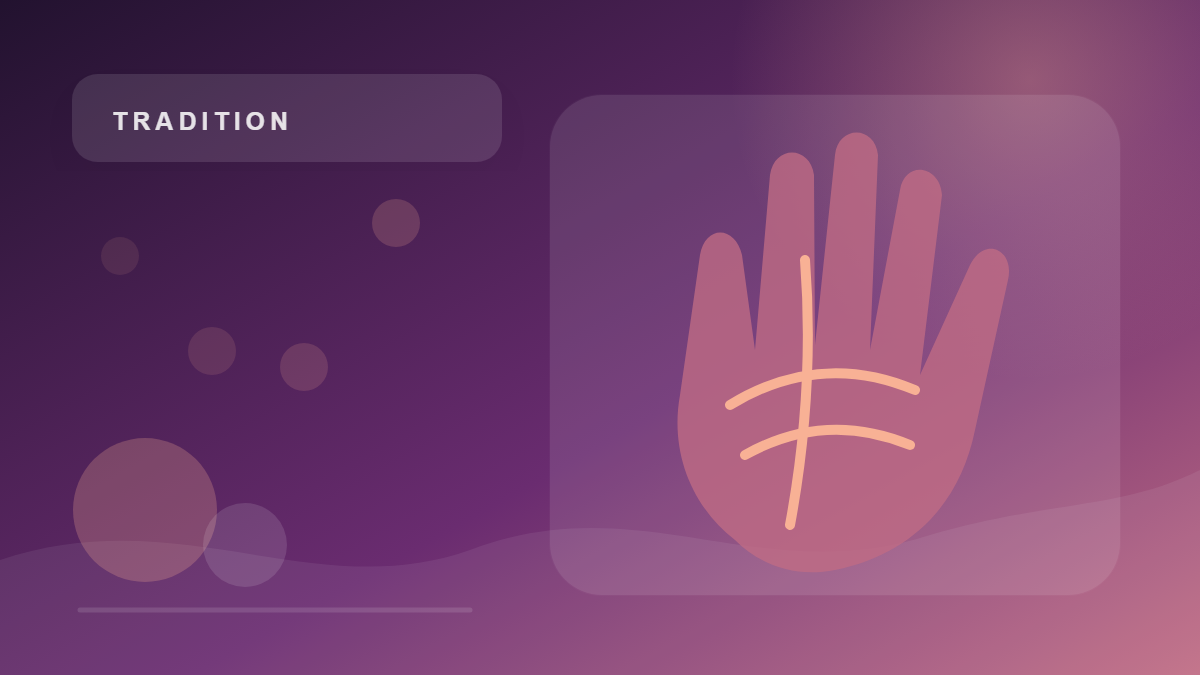
Traditional context: Use similar photography is discussed here as part of face reading, palmistry or Feng Shui traditions. Different schools can interpret the same visible feature differently, so the page explains the idea rather than presenting it as a scientific fact.
Responsible-use boundary: Comparing left and right palms in a belief-based reading must not be used to diagnose health, determine lifespan, identify sensitive traits, judge employability or replace professional evidence. The useful role is cultural interest and personal reflection.
Use similar photography
Different light, angle or finger position can create apparent line differences that come from the photograph rather than the hand.
Capture both palms under similar lighting and distance when comparison is important.
Label the hands correctly
A reversed selfie or unlabeled upload can cause left and right to be confused.
Ask the user to identify the hand and preserve that label with the image.
Compare the same feature on both sides
Look at a corresponding line or hand-shape feature rather than making a vague whole-hand comparison.
Structured comparison reduces the temptation to invent differences.
Normal asymmetry is expected
Line depth, branching and hand shape can differ naturally between sides.
Do not treat every asymmetry as a problem or hidden condition.
Traditional meaning depends on the school
Some systems compare dominant and non-dominant hands, while others assign left and right symbolic roles.
State the interpretive rule being used so the user can understand the narrative.
Common mistakes to avoid
- Comparing photos taken under very different light.
- Mislabeling left and right.
- Treating asymmetry as disease.
Practical checklist
- Use similar image conditions.
- Label each hand.
- Compare one feature at a time.
- Expect natural asymmetry.
- State the palmistry convention.
Frequently asked questions
Should both photos use the same lighting?
Yes, similar conditions make visual comparison more reliable.
Are different lines on each hand normal?
Yes. Natural variation between hands is common.
Does palmistry agree on what each hand means?
No. Different traditions use different symbolic conventions.