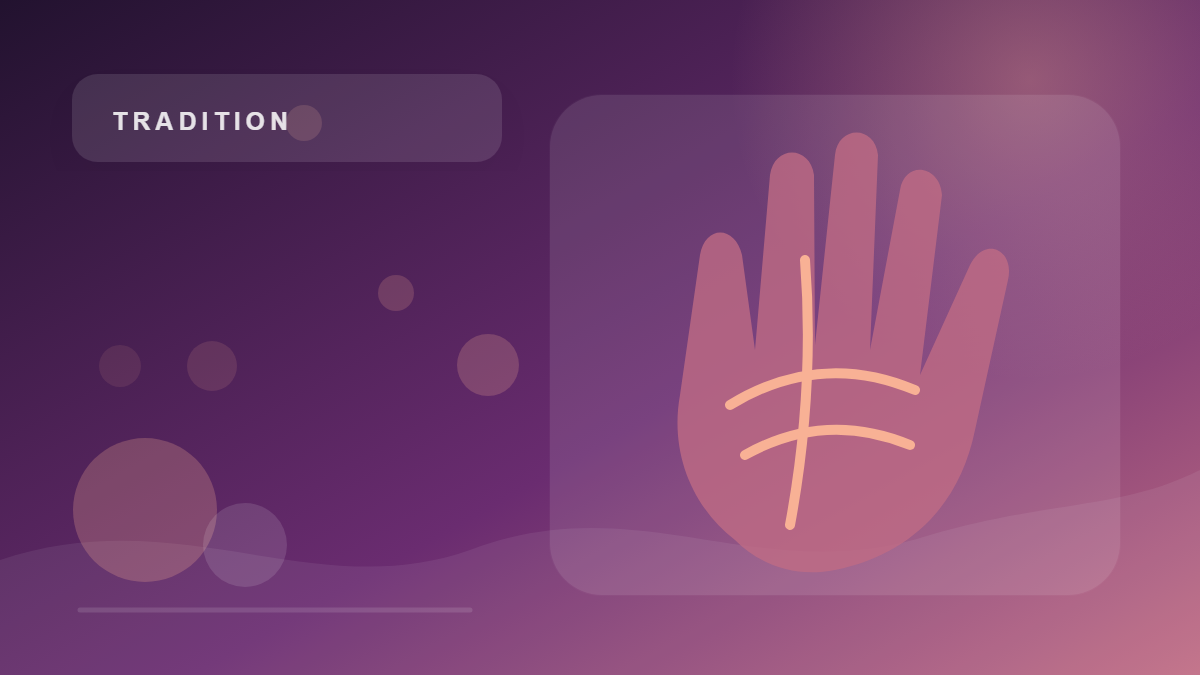
Traditional context: Where the line is usually identified is discussed here as part of face reading, palmistry or Feng Shui traditions. Different schools can interpret the same visible feature differently, so the page explains the idea rather than presenting it as a scientific fact.
Responsible-use boundary: The life line in palmistry: meaning, myths and limits must not be used to diagnose health, determine lifespan, identify sensitive traits, judge employability or replace professional evidence. The useful role is cultural interest and personal reflection.
Where the line is usually identified
In many palmistry traditions the life line begins near the space between thumb and index finger and curves around the base of the thumb toward the wrist. Its depth, curvature and continuity may be described symbolically.
The first task is simply to identify the visible crease correctly. A blurred or shadowed photo can make line boundaries uncertain.
The name is not literal
Traditional language may connect the line with vitality, rhythm or major life patterns, but those ideas belong to palmistry symbolism.
Srithongkwao does not translate line length into years of life and does not present a short or faint line as a health warning.
Breaks and branches are symbolic motifs
Some systems discuss branches, interruptions or changes in depth as symbolic transitions. Different schools can interpret the same pattern differently.
Describe the visible mark before offering a traditional interpretation and avoid dramatic event predictions.
Hand position changes appearance
Bending the thumb or cupping the palm can deepen some creases and hide others.
Use a comfortably open hand so the line is photographed under a neutral position.
Medical conclusions are prohibited
Palm creases cannot diagnose disease, cardiovascular status, physical strength or future health events.
Any health concern belongs with qualified medical professionals and evidence-based assessment.
Common mistakes to avoid
- Converting line length into years of life.
- Calling a break a prediction of disaster.
- Using palm creases as medical evidence.
Practical checklist
- Use a clear full-palm photo.
- Identify the line cautiously.
- Treat breaks symbolically.
- Never predict lifespan.
- Keep health outside the reading.
Frequently asked questions
Does a short life line mean a short life?
No. Srithongkwao explicitly rejects lifespan prediction from palm lines.
Can a broken line predict an accident?
No factual prediction should be made from a crease pattern.
Why can the line look different when I move my thumb?
Hand posture changes skin tension and crease visibility.