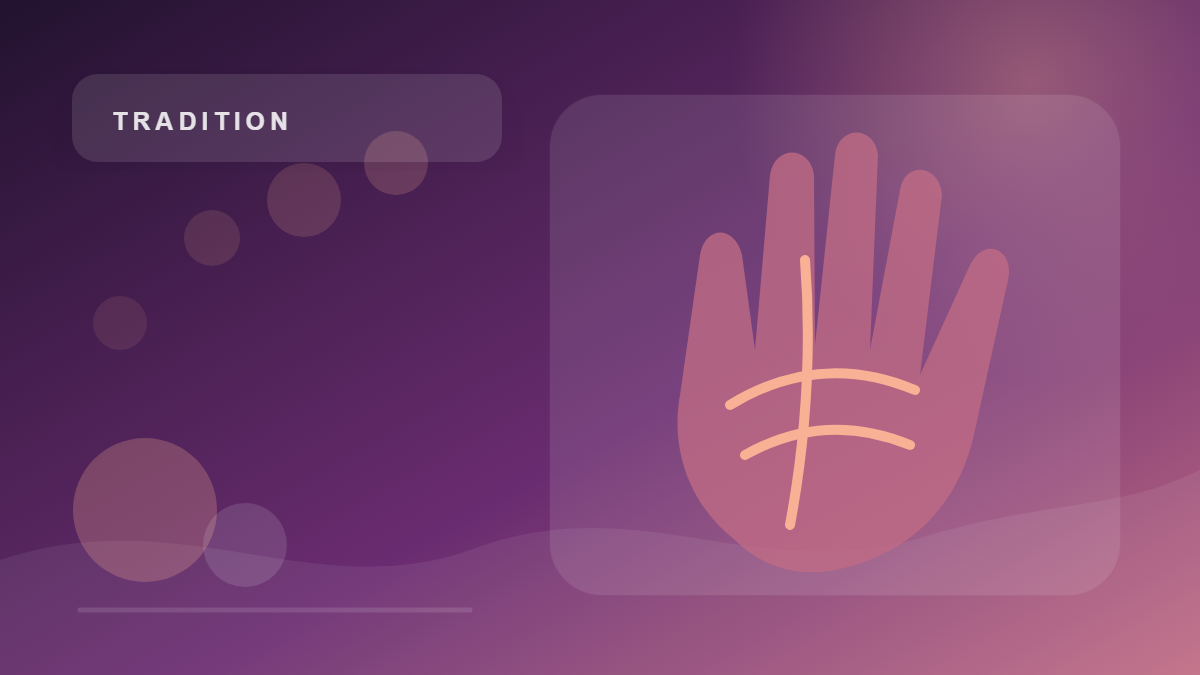
Traditional context: Compare within the same hand is discussed here as part of face reading, palmistry or Feng Shui traditions. Different schools can interpret the same visible feature differently, so the page explains the idea rather than presenting it as a scientific fact.
Responsible-use boundary: Finger proportions in traditional palmistry must not be used to diagnose health, determine lifespan, identify sensitive traits, judge employability or replace professional evidence. The useful role is cultural interest and personal reflection.
Compare within the same hand
Readers may compare relative finger lengths rather than absolute centimetres.
Use a flat, straight-on image so perspective does not make the near fingers appear larger.
Spacing changes with hand tension
Spreading the fingers wide or holding them tightly together changes the visible spacing.
Use a comfortable natural opening rather than a forced pose.
Traditional symbolic labels differ
Individual fingers can be assigned planetary or elemental symbolism in some systems, while other schools use different associations.
Explain the symbolism as tradition-specific rather than universal fact.
Injury and normal variation matter
Past injury, joint position and natural asymmetry can influence alignment or length appearance.
Do not turn visible differences into medical diagnosis or personality certainty.
Proportion is not ability
Finger length does not establish intelligence, musical skill, sexuality or professional aptitude.
Keep interpretations non-sensitive and explicitly belief-based.
Common mistakes to avoid
- Using a strongly angled hand photo.
- Forcing unnatural finger spacing.
- Inferring ability or sexuality from finger proportions.
Practical checklist
- Use a straight-on image.
- Relax the fingers.
- Compare relative lengths carefully.
- State the traditional framework.
- Avoid sensitive conclusions.
Frequently asked questions
Do finger ratios prove personality?
No. Palmistry associations are symbolic beliefs, not validated personality tests.
Why should fingers be relaxed?
Forced spacing changes the visible relationships between them.
Can an old injury affect the reading image?
Yes. Visible alignment may reflect injury or normal anatomy and should not be over-interpreted.