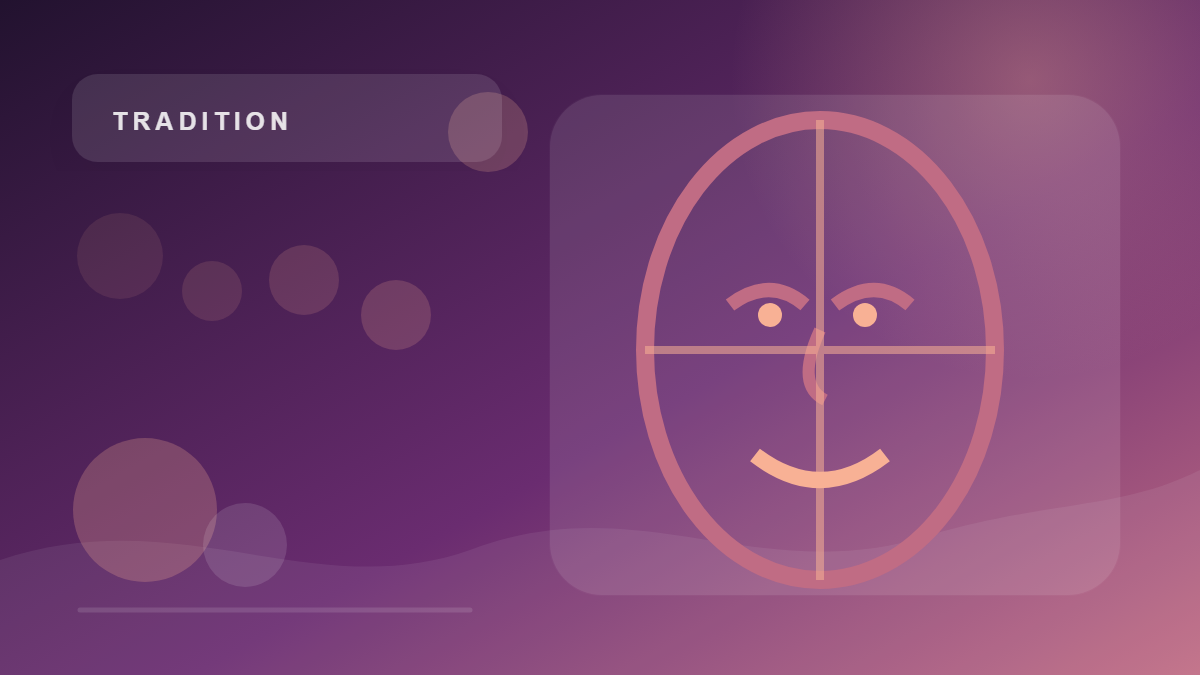
Traditional context: Visible shape is different from gaze is discussed here as part of face reading, palmistry or Feng Shui traditions. Different schools can interpret the same visible feature differently, so the page explains the idea rather than presenting it as a scientific fact.
Responsible-use boundary: The eye area in traditional face reading must not be used to diagnose health, determine lifespan, identify sensitive traits, judge employability or replace professional evidence. The useful role is cultural interest and personal reflection.
Visible shape is different from gaze
Eye opening, lid shape and spacing can be described visually, while gaze direction changes from moment to moment.
Do not treat where someone happened to look in a photograph as a permanent characteristic.
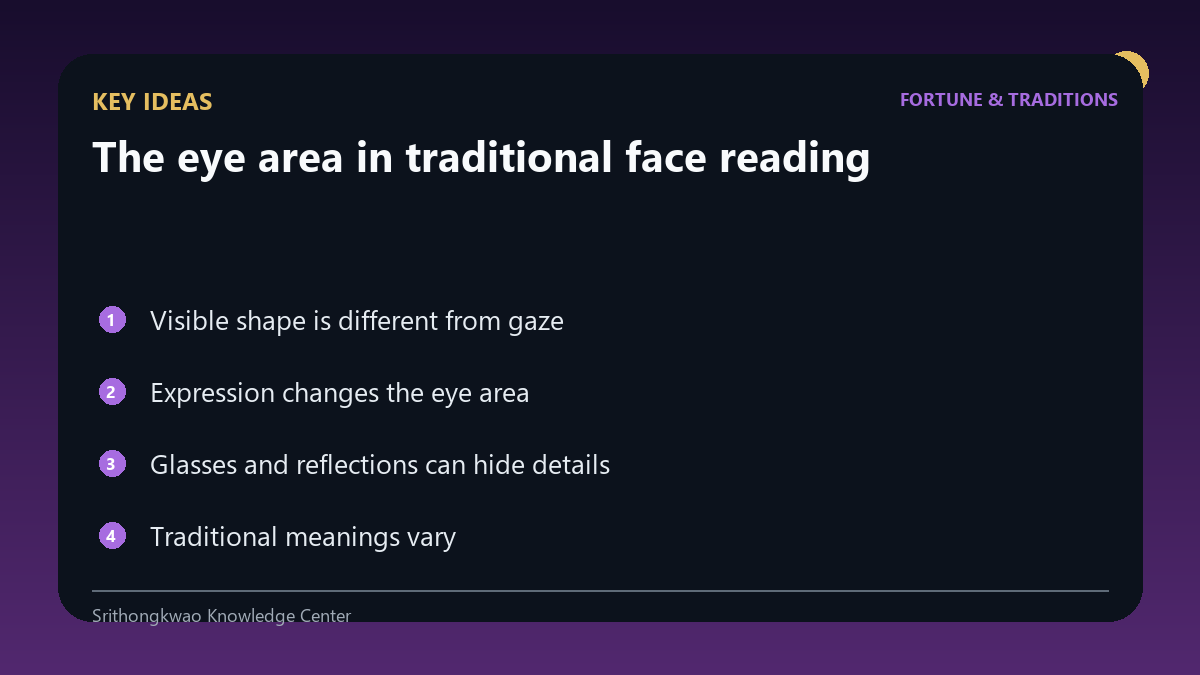
Expression changes the eye area
Smiling, squinting, bright light and fatigue can change how open the eyes appear and create temporary creases.
Use even light and a relaxed expression for a more neutral image.
Glasses and reflections can hide details
Frames, tinted lenses and glare may cover the eyelids or change perceived proportions.
Adjust light or angle if reflections obscure the area, but do not require someone to remove medically necessary eyewear if uncomfortable.
Traditional meanings vary
Some traditions assign symbolic themes to eye shape or spacing, but the same feature can receive different interpretations across schools.
Present those themes as cultural interpretation rather than factual evidence of honesty, intelligence or emotional state.
Avoid health and identity inference
Eye colour, redness, asymmetry or visible differences should not be used by a fortune feature to diagnose disease or infer protected identity traits.
Keep the content focused on non-sensitive traditional symbolism and image quality.
Common mistakes to avoid
- Calling eye shape proof of honesty.
- Diagnosing health from a photograph.
- Confusing squinting or gaze with permanent structure.
Practical checklist
- Use comfortable even light.
- Reduce glare.
- Use a relaxed gaze.
- Describe before interpreting.
- Avoid health and moral claims.
Frequently asked questions
Can the eye area reveal whether someone is honest?
No. Appearance should not be used as factual evidence of honesty or character.
What if glasses cover part of the eyes?
The reading should acknowledge the limitation rather than inventing hidden detail.
Can a face-reading app diagnose eye health?
No. Medical concerns require qualified medical assessment.